

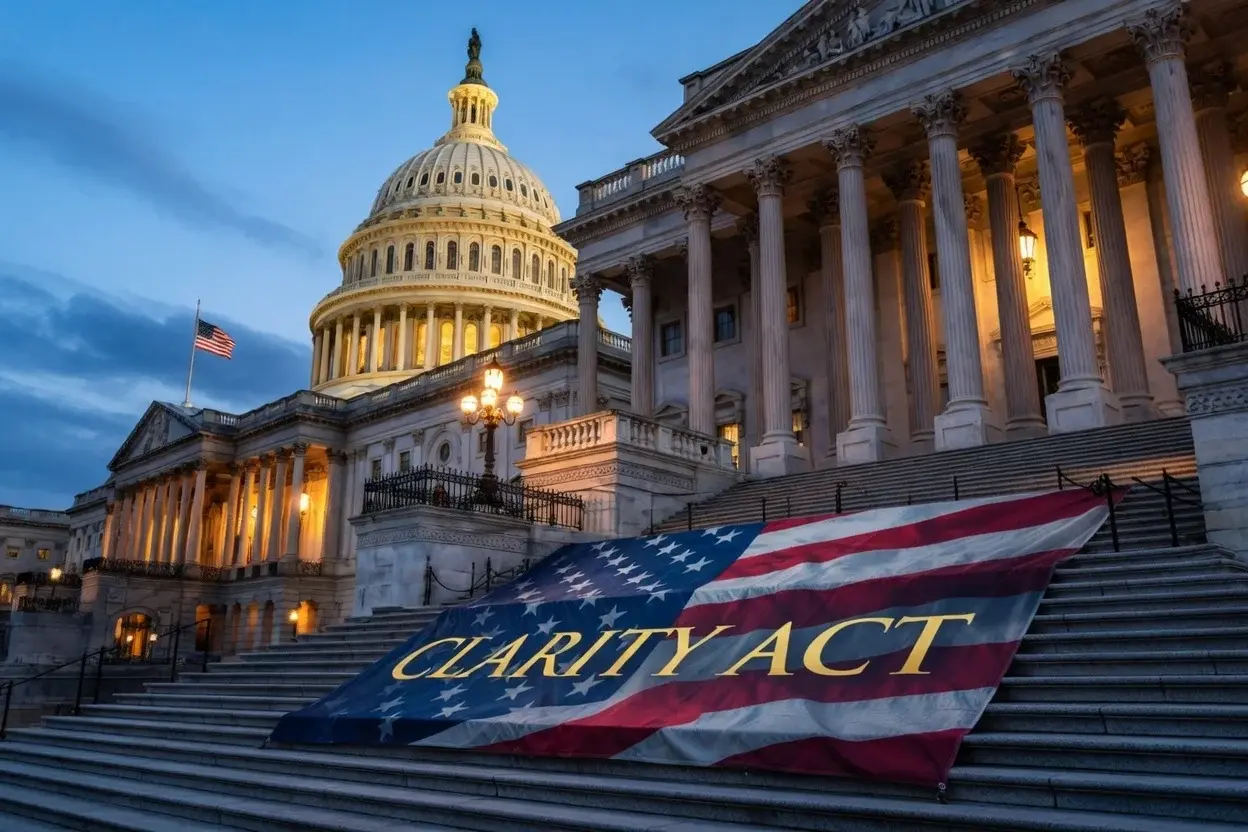
The Clarity Act, a proposed piece of legislation aimed at increasing transparency around cryptocurrency holdings of public officials, has hit a significant roadblock in the Senate. The bill, which would require elected officials and senior government employees to disclose their cryptocurrency assets, has sparked a heated debate over former President Donald Trump's crypto profits and broader ethical concerns. As the Senate prepares for a contentious vote, the future of the act remains uncertain.
Background of the Clarity Act
The Clarity Act was introduced earlier this year by a bipartisan group of lawmakers seeking to address the growing influence of digital currencies in politics. The legislation mandates that all federal officials, including the president, vice president, members of Congress, and senior executive branch appointees, regularly disclose any cryptocurrency holdings exceeding $1,000. Proponents argue that such transparency is necessary to prevent conflicts of interest and ensure public trust, especially as cryptocurrencies become more mainstream. The bill also includes provisions for public access to these disclosures, modeled after existing financial disclosure laws.
Supporters of the Clarity Act emphasize that the current framework for financial disclosures, established decades ago, does not adequately cover digital assets. Cryptocurrencies, by their nature, can be easily transferred and stored anonymously, creating potential loopholes. The act seeks to close these gaps by requiring detailed reporting of wallet addresses, transaction histories, and the value of holdings at the time of disclosure. Failure to comply could result in fines or even criminal penalties.
Senate Resistance and Political Dynamics
The primary opposition to the Clarity Act stems from concerns about its impact on former President Donald Trump. Trump, who has been actively involved in the cryptocurrency space through his own ventures and endorsements, reportedly holds substantial crypto assets. His business dealings have long been a subject of scrutiny, and the Clarity Act would force him to publicly disclose the extent of his involvement. Several Republican senators have argued that the bill is a targeted attack on Trump, designed to embarrass him and undermine his political influence.
Senator John Smith (R-TX), a vocal critic of the bill, stated during a floor speech that "the Clarity Act is not about transparency; it's about partisan weaponization. It singles out one individual—President Trump—while ignoring the broader issues in our financial system." Other senators have echoed this sentiment, warning that the bill could set a dangerous precedent for government overreach into personal financial matters. The resistance has gained momentum in recent weeks, with key committee chairs indicating they will oppose the act unless significant amendments are made.
The Role of Trump's Crypto Profits
Former President Trump's involvement in cryptocurrency has been a focal point of the debate. Trump has publicly embraced digital assets, launching his own NFT collection and promoting a crypto exchange platform. Estimates of his crypto profits vary widely, with some analysts suggesting he has made tens of millions of dollars through various ventures. The Clarity Act would require him to disclose these earnings, potentially revealing conflicts of interest if he continues to influence policy after his presidency.
Supporters of the bill argue that Trump's crypto activities exemplify the need for stronger disclosure laws. "We cannot have a former president—or any high-ranking official—secretly profiting from a volatile and largely unregulated market," said Senator Jane Doe (D-CA), a co-sponsor of the act. "The American people deserve to know who is influencing our leaders and whether those interests align with the public good." However, the resistance from Trump's allies has complicated efforts to advance the legislation.
Broader Implications for Cryptocurrency Regulation
The Clarity Act represents a broader push to regulate the cryptocurrency industry, which has faced scrutiny for its lack of transparency and susceptibility to fraud. Numerous scandals involving digital assets have eroded public confidence, prompting lawmakers to consider stricter oversight. The bill is seen as a first step toward creating a comprehensive regulatory framework that balances innovation with accountability.
Industry experts have expressed mixed reactions. Some argue that mandatory disclosures could deter officials from investing in legitimate crypto projects, stifling innovation. Others contend that transparency will foster trust and encourage responsible investment. The debate in the Senate highlights the challenges of regulating a rapidly evolving technology while respecting privacy rights and political realities.
Key Facts and Figures
The Clarity Act has drawn widespread attention due to its potential impact on the 2024 presidential election. Trump, as a leading candidate, would be compelled to disclose his crypto holdings, providing a detailed look at his financial interests. Polls show that a majority of Americans support greater transparency in government, but opinions are divided along party lines. A recent survey indicated that 65% of Democrats favor the bill, compared to only 35% of Republicans.
In addition to Trump, several other high-profile figures could be affected. Members of Congress who own cryptocurrency, including both Democrats and Republicans, would need to comply. The bill's opponents have raised concerns about the administrative burden of tracking and reporting rapidly changing crypto values, which can fluctuate wildly in short periods. The legislation includes provisions for initial disclosures followed by quarterly updates, but critics argue that even this schedule may be insufficient.
Next Steps and Potential Amendments
As the Senate debates the Clarity Act, negotiations are underway to find a compromise. Some lawmakers have proposed amendments that would exempt smaller holdings or narrow the definition of covered individuals. Others have suggested a tiered disclosure system based on the value of assets held. However, the core issue remains the treatment of former presidents and other senior officials who may have substantial crypto interests.
The White House has remained neutral on the bill, though President Biden's administration has expressed general support for cryptocurrency regulation. The Senate majority leader has indicated that the bill will be brought to a vote within the next few months, but the outcome is far from certain. If the Clarity Act fails, it could delay broader regulatory efforts and leave the current disclosure gaps unaddressed.
Meanwhile, former President Trump has remained silent on the matter, though his legal team has reportedly prepared challenges to any legislation that targets his financial disclosures. The ongoing dispute underscores the deep partisan divisions that often complicate efforts to modernize financial regulations in the United States. As the cryptocurrency market continues to grow, the need for clear and enforceable rules becomes increasingly urgent. The Clarity Act, despite its current struggles, represents a crucial attempt to bring transparency to a murky corner of American finance.
Source:Blockonomi News