

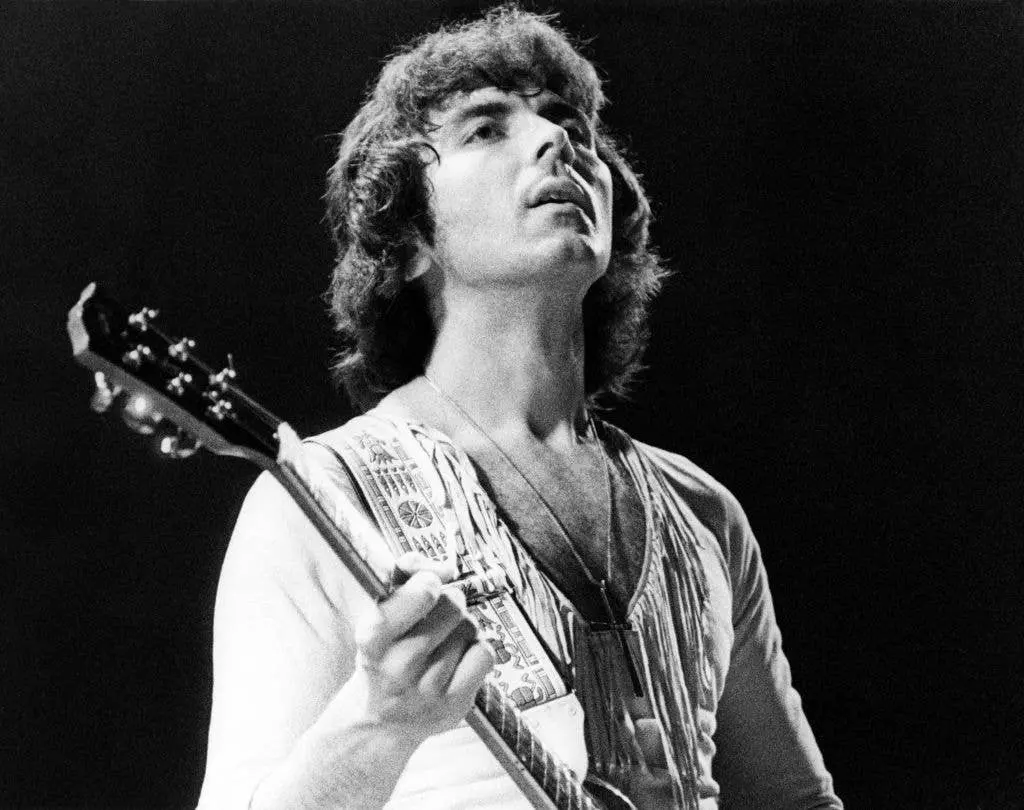
More than five decades after its release, Black Sabbath's nearly six-minute song 'Sabbra Cadabra' continues to stand as one of the defining tracks from the band's landmark 1973 album Sabbath Bloody Sabbath. Released as the fourth song on the record, the 5-minute, 59-second track remains a favorite among rock and heavy metal fans thanks to its powerful guitar riffs, blues-inspired groove and experimental sound.
The song arrived during a critical point in Black Sabbath's career. After touring behind Vol. 4, the band struggled with exhaustion, substance abuse and writer's block while trying to begin work on its fifth studio album in Los Angeles. Guitarist Tony Iommi later recalled that ideas were simply not coming together, leaving the group frustrated. Looking for a fresh start, the band left California and returned to England, where they rehearsed inside Clearwell Castle in Gloucestershire. The change in surroundings proved to be exactly what they needed.
While working there, Iommi created the unforgettable opening riff for the album's title track, 'Sabbath Bloody Sabbath,' reigniting the band's creativity and setting the tone for the rest of the album. Among the songs that followed was 'Sabbra Cadabra,' a track that showcased Black Sabbath expanding beyond the heavy, doom-filled sound that first made them famous.
'Sabbra Cadabra' Showed Black Sabbath's Musical Growth
Unlike many of the band's earlier recordings, 'Sabbra Cadabra' blended heavy metal with blues rock and progressive influences while keeping the group's signature dark edge intact. Iommi's guitar work remains the centerpiece of the song, delivering memorable riffs that helped define the band's sound. Bassist Geezer Butler and drummer Bill Ward built a solid rhythmic foundation, while Ozzy Osbourne's distinctive vocals gave the track its emotional energy.
The recording also featured a notable guest appearance from Yes keyboardist Rick Wakeman, who played piano and Minimoog on the song during the Sabbath Bloody Sabbath sessions at Morgan Studios in London. According to reports, Wakeman declined payment and instead accepted beer as compensation for his contribution. This collaboration highlighted the band's willingness to experiment with new sounds and arrangements, moving beyond their traditional heavy metal roots.
The album itself marked an important creative step for the band. Alongside crushing guitar riffs, Sabbath Bloody Sabbath introduced synthesizers, strings, keyboards and more detailed song arrangements. Those changes earned praise from critics while helping the album become Black Sabbath's fifth consecutive platinum-certified release in the U.S. The album reached No. 4 on the U.K. Albums Chart and No. 11 on the Billboard 200, eventually earning platinum certification in America.
Background and Context
Black Sabbath formed in Birmingham, England, in 1968, originally under the name Earth. The band—Ozzy Osbourne (vocals), Tony Iommi (guitar), Geezer Butler (bass), and Bill Ward (drums)—quickly developed a heavy, dark sound that would become the blueprint for heavy metal. Their self-titled debut album in 1970 and the follow-up Paranoid (1970) established them as pioneers of the genre, with songs like 'Iron Man' and 'War Pigs' becoming anthems for a generation. Subsequent albums Master of Reality (1971) and Vol. 4 (1972) solidified their reputation, but the band faced mounting pressures from constant touring and substance abuse by the time they started working on their fifth album.
The decision to retreat to Clearwell Castle was a turning point. The ancient castle, with its eerie atmosphere and isolation, provided the perfect environment for creative rejuvenation. It was during this period that Iommi crafted the iconic riff for 'Sabbath Bloody Sabbath,' a moment he later described as a breakthrough that broke the band's creative block. The castle's dungeon-like rehearsal space added to the dark, mystical vibe that permeated the album.
'Sabbra Cadabra' stands out not only for its musical complexity but also for its lyrical themes. The song's title is a play on the word 'abracadabra,' suggesting a magical or incantatory quality. The lyrics, written primarily by bassist Geezer Butler, explore themes of power, temptation, and the supernatural—a common thread in Black Sabbath's work. Lyrically, the song tells a story of a seductive witch or enchantress, blending mythological references with the band's characteristic dark fantasy.
Musical Analysis
From a musical perspective, 'Sabbra Cadabra' is a masterclass in dynamics and structure. The track opens with a slow, bluesy guitar riff that builds tension before exploding into a heavy, driving verse. Iommi's use of the wah-wah pedal and his distinctive pentatonic scales give the song a raw, earthy feel, while Ward's drumming—particularly his use of syncopated rhythms and fills—adds a sense of urgency. Butler's bass lines are thick and melodic, locking in with Ward to create a powerhouse rhythm section. Osbourne's vocal delivery is both menacing and melodic, showcasing his ability to convey emotion while maintaining a sense of menace.
The song's middle section features a keyboard solo by Rick Wakeman, which introduces a progressive rock element that was unconventional for Black Sabbath at the time. Wakeman's Minimoog adds a swirling, cosmic texture that contrasts with the heavy guitar riffs, demonstrating the band's willingness to incorporate new instruments and styles. The track also includes a subtle use of strings, arranged by the band's producer, which further enhances the song's epic scope. These elements combine to create a piece that is both heavy and intricate, a departure from the straightforward hard rock of their earlier albums.
Another notable aspect is the song's length. At nearly six minutes, 'Sabbra Cadabra' was longer than typical rock singles of the era, allowing the band to explore extended instrumental passages and build a gradual emotional arc. This approach influenced later heavy metal and progressive rock bands, who adopted similar structures for their own compositions. The track's structure—slow introduction, heavy verse, melodic chorus, instrumental break, and climactic finale—became a template for many metal bands in the decades that followed.
Legacy and Influence
Although 'Sabbra Cadabra' was never released as a single, its reputation has grown over time. The song has reached new audiences through later cover versions. Metallica famously recorded its own version of 'Sabbra Cadabra' for the band's 1998 covers album Garage Inc., introducing the song to another generation of heavy metal listeners. Metallica's rendition stays faithful to the original while adding their own aggressive edge, a testament to the song's enduring appeal. Other artists, including tribute bands and solo performers, have also covered the track, cementing its status as a fan favorite.
Music historians and longtime fans often point to Sabbath Bloody Sabbath as one of Black Sabbath's most important albums because it balanced the group's classic heavy sound with new musical ideas. While the title track is frequently praised as one of Tony Iommi's greatest riffs, 'Sabbra Cadabra' remains one of the record's most adventurous performances. The album's blend of heavy metal, blues, and progressive elements influenced countless bands, from Iron Maiden and Judas Priest to modern acts like Mastodon and Ghost.
The album arrived on Nov. 30, 1973, and became an important turning point for the Birmingham band. It reached No. 4 on the U.K. Albums Chart and No. 11 on the Billboard 200 in the U.S. while eventually earning platinum certification in America. Critics at the time praised the band for expanding their musical palette without losing their core identity. Rolling Stone's review noted that the album 'shows the band at its most creative and confident,' a sentiment that has held up over the decades.
Today, 53 years after its release, 'Sabbra Cadabra' remains one of the lasting highlights from that era. Running just under six minutes, the song continues to be recognized for combining crushing riffs, blues-inspired musicianship and creative experimentation into a recording. The track stands as a testament to Black Sabbath's ability to evolve while staying true to the dark, heavy sound that made them legends of rock music. For fans new and old, 'Sabbra Cadabra' offers a glimpse into a band at the height of its powers, unafraid to push boundaries and redefine what rock music could be.
Source:Yahoo Entertainment News