

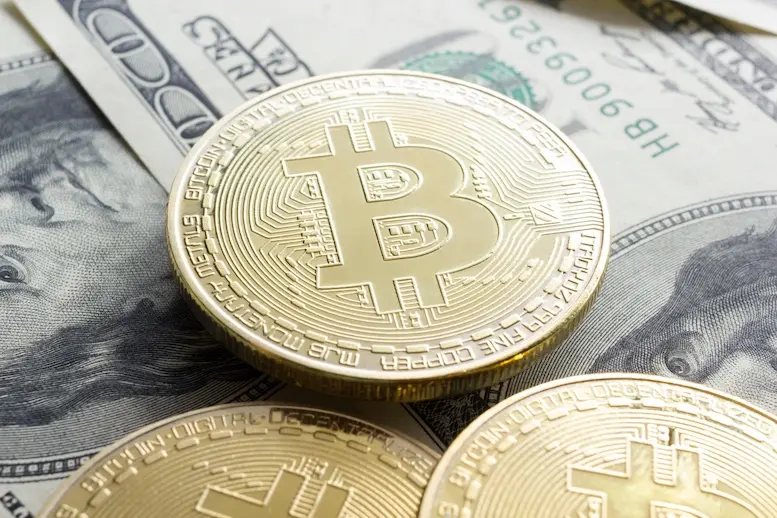
Imagine risking $1,000 on Bitcoin (BTC) during the May 19, 2021, crash, which caused the asset to plunge more than 30% to a low of about $30,316. As of May 19, 2026, you would be sitting on an unrealized gain of more than 150%. During the May 19 Bitcoin crash, $1,000 fetched roughly 0.033 BTC, which could be worth approximately $2,529 at press time. Despite the BTC price volatility over the years, the flagship coin has climbed 152% to trade at about $76,650 on Tuesday, according to data from TradingView.
Several catalysts converged to trigger the May 19, 2021, Bitcoin crash. Among the top was China’s State Council, which renewed its crackdown on BTC mining and trading activity. Additionally, Elon Musk had just suspended Tesla Inc.’s Bitcoin payments over environmental concerns, reversing a position he had championed only months earlier. Binance’s perpetual futures market was carrying record open interest, largely built on leverage, thus setting the stage right for a single push lower that would trigger a cascade of forced liquidations.
How did the $1,000 invested in Bitcoin on May 19, 2021, perform over the years?
Given the volatility over the years, the 0.033 BTC purchased during the May 19 crash appreciated to about $2,277 by the end of 2021. Moreover, Bitcoin price surged to an all-time high (ATH) of approximately $69,000 in early November 2021. The BTC holdings, however, crashed in value during the 2022 bear market, reaching a low of $517 during the FTX-induced capitulation. In 2025, the same portfolio surged to around $4,141, as the flagship coin reached an ATH of $125,531. Among the likely investors who risked $1,000 on Bitcoin during the May 19, 2021, crash were U.S.-eligible adults who had received $1,400 via the third round of federal stimulus checks.
The May 2021 crash was one of the most violent single-day drops in Bitcoin’s history. At its peak liquidation cascade, over $8 billion in long positions were wiped out across all crypto exchanges. The sell-off was amplified by the extreme leverage prevalent in the market at the time. Many traders who had borrowed heavily to bet on higher prices were forced to sell into the decline, exacerbating the drop. The crash also coincided with a broader risk-off move in global markets as concerns about inflation and regulatory crackdowns mounted.
China’s renewed clampdown on cryptocurrency mining and trading was particularly significant. The country had been the world’s largest Bitcoin mining hub, accounting for over 65% of the global hash rate. After the announcement, miners rushed to relocate their operations abroad, causing a temporary decline in network security and a spike in mining difficulty adjustments. The migration of Chinese miners to countries like the United States, Kazakhstan, and Canada reshaped the industry’s geographical landscape.
Elon Musk’s reversal on Tesla accepting Bitcoin also dealt a psychological blow. Only three months earlier, Tesla had purchased $1.5 billion worth of Bitcoin and announced plans to accept it as payment, which had sent the price soaring. Musk’s sudden about-face due to concerns over the environmental impact of Bitcoin mining – and the subsequent use of proof-of-stake alternatives – led to criticism and confusion within the crypto community. The decision also prompted other companies to reconsider their own crypto strategies.
The Binance perpetual futures market played a key role in the crash mechanics. Open interest in BTC perpetual contracts had reached an all-time high of over $15 billion, much of it leveraged 10x or more. When the price began to fall, the funding rate – which had been heavily positive (longs paying shorts) – flipped negative, forcing longs to deleverage. The cascading liquidations created a feedback loop that drove the price 30% lower in a matter of hours.
Despite these dramatic events, the $1,000 investment made at the bottom of the crash proved resilient over the long term. The 0.033 BTC position fluctuated wildly over the ensuing years. After the initial recovery to $69,000 in late 2021, the portfolio value hit a local peak of $2,277. But the 2022 bear market saw Bitcoin fall to $15,500 during the FTX collapse in November 2022. At that point, the investment was worth just $517 – a loss of nearly 50% from the initial $1,000. The FTX contagion event wiped out billions of dollars in customer funds and shook confidence in centralized exchanges.
The portfolio did not recover until late 2023, when Bitcoin began climbing in anticipation of the approval of spot Bitcoin ETFs in the United States. The first ETF approvals came in January 2024, unleashing a wave of institutional demand. By March 2024, Bitcoin had set a new all-time high above $70,000. The 0.033 BTC was again worth around $2,300. The 2024–2025 cycle saw even more dramatic gains, driven by continued ETF inflows, the Bitcoin halving in April 2024 (which reduced block rewards from 6.25 to 3.125 BTC), and growing interest from sovereign wealth funds and pension funds.
By early 2025, Bitcoin reached an all-time high of $125,531, according to TradingView data. The 0.033 BTC position peaked at approximately $4,141 – a 314% return from the initial $1,000 and over 400% from the 2022 low. The rally was fueled by a confluence of factors: the halving supply shock, rising inflation expectations, and a flight to alternative assets amid geopolitical tensions. Additionally, the launch of Bitcoin ETF options and futures on major exchanges provided new avenues for leverage and hedging, attracting speculators and long-term investors alike.
As of May 2026, Bitcoin trades around $76,650, down from its 2025 peak but still well above the 2021 crash level. The investment of 0.033 BTC is worth about $2,529. The volatility remains a hallmark of the asset, with drawdowns of 20–30% occurring regularly. However, for those who held through the rollercoaster, the returns have been substantial. The May 2021 crash, which seemed catastrophic at the time, turned out to be a buying opportunity for those who dared to take the risk.
The narrative around Bitcoin investing has also evolved. In 2021, the predominant story was retail speculation and meme-driven mania. By 2026, Bitcoin has become a mainstream asset class, with regulated ETFs, futures, and options markets. Major corporations hold Bitcoin on their balance sheets, and financial advisors routinely recommend allocating 1–5% of portfolios to cryptocurrency. The regulatory environment, while still patchy globally, has become more favorable in many jurisdictions, with the U.S. Securities and Exchange Commission approving multiple spot ETFs and clarifying certain aspects of crypto tax treatment.
One of the key lessons from this five-year journey is the importance of dollar-cost averaging and long-term holding. A lump-sum investment at the exact bottom of a crash is rare, but investors who consistently added to their positions during the 2022 bear market likely achieved even better returns. The 0.033 BTC bought at $30,316 cost an average price of $30,316 per BTC. By 2026, that cost basis is less than half of the current price. Even after the sharp decline from the 2025 highs, the investment remains profitable.
The May 19, 2021 crash also highlights the role of external events in shaping crypto markets. Government crackdowns, celebrity tweets, and exchange leverage all contributed to the dramatic price action. While such events create short-term turbulence, they also offer entry points for disciplined investors. The 2021 crash was not an isolated incident – similar drawdowns occurred during the 2023 banking crisis (when Bitcoin fell to $20,000) and the 2024 liquidation events tied to Terra’s UST depegging. Each time, the asset eventually recovered and went on to set new highs.
For the hypothetical investor who put $1,000 into Bitcoin on May 19, 2021, the ride has been anything but smooth. From the thrill of a 150% gain by year-end, to the despair of a 50% loss in 2022, to the euphoria of a 400% peak in 2025, the experience encapsulates Bitcoin’s notorious volatility. Yet the long-term trajectory has been upward, consistent with the historical pattern of boom-bust cycles that characterize early-stage asset classes.
Looking ahead, the future of Bitcoin remains uncertain. Critics point to the energy consumption, scalability issues, and the potential for disruptive technologies like quantum computing. Supporters counter with the narrative of digital gold, growing adoption, and the finite supply of 21 million coins. What is clear is that the $1,000 investment made five years ago has already demonstrated the asymmetric potential that draws investors to Bitcoin – huge upside tempered by stomach-churning drawdowns. Whether it will continue to appreciate over the next five years depends on factors ranging from global monetary policy to technological advances, but the story of the May 2021 crash will remain a case study in risk-taking and reward.
Source:Finbold News