

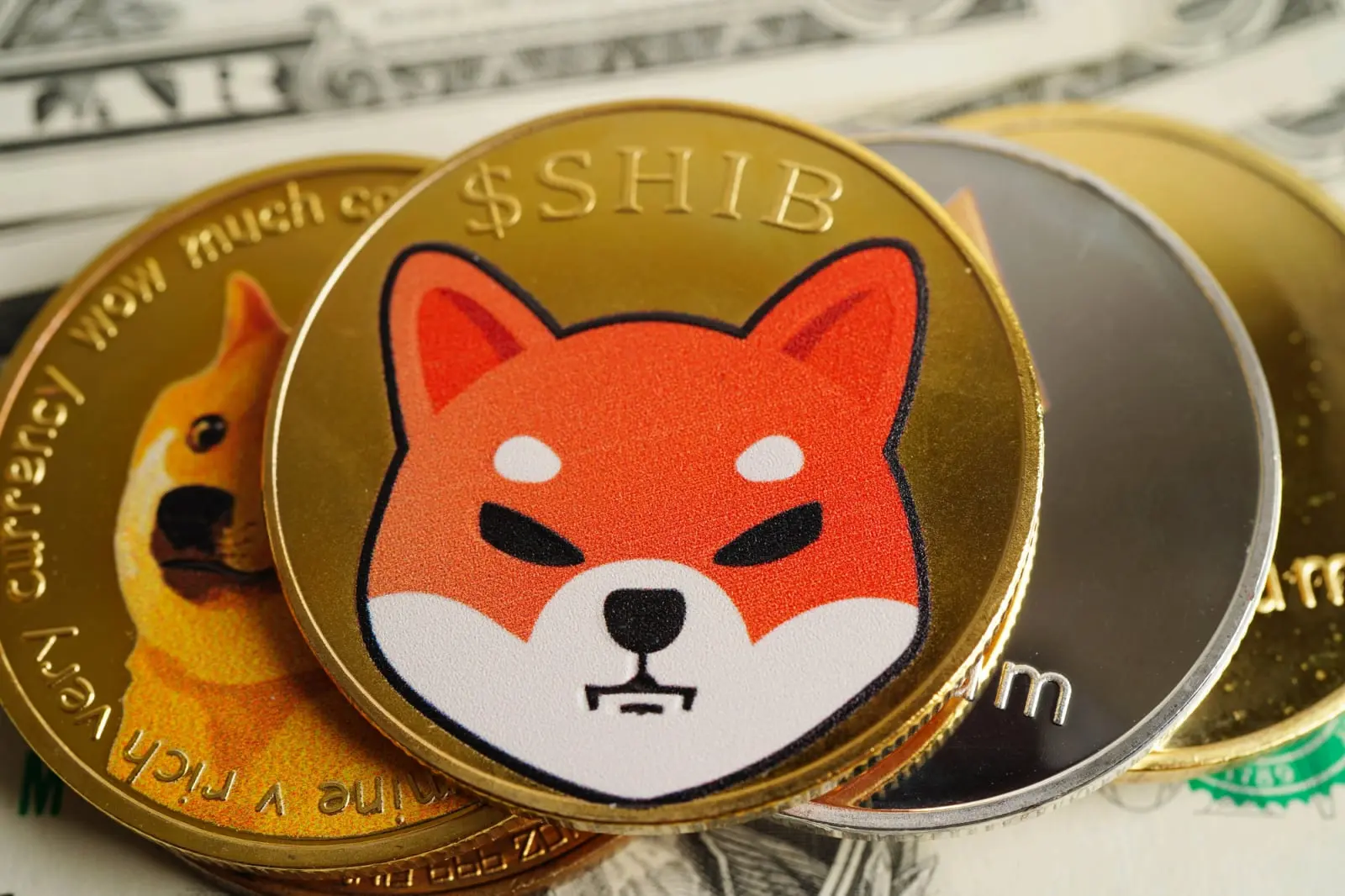
Japanese technology conglomerate Rakuten has taken a novel step in merging physical collectibles with digital assets by unveiling the first-ever tactile Shiba Inu (SHIB) coin. Issued through its Rakuten Wallet subsidiary, the commemorative metal token is the fifth release in the company's "Real Coin" series, following earlier editions featuring Bitcoin, Ethereum, XRP, and other major cryptocurrencies. The coin has already garnered enthusiastic internal feedback due to its distinctive sandblast finish, offering a premium matte texture that Rakuten employees universally approved during office testing.
The physical SHIB coin is a non-functional souvenir, holding no blockchain connectivity or cryptographic value. However, its launch underscores Rakuten's strategic ambition to leverage the massive popularity of the Shiba Inu meme coin within its ecosystem of 44 million registered users in Japan. This initiative also coincides with a historic shift in Japan's regulatory landscape: the country's parliament recently passed comprehensive amendments to the Financial Instruments and Exchange Act, bringing crypto assets under formal securities-like supervision.
Rakuten's Real Coin Series and the Tactile Experience
The Real Coin series began as a collectible concept aimed at converting digital cryptocurrencies into tangible, aesthetically pleasing objects. Previous releases have included Bitcoin, Ethereum, XRP, and other tokens, each struck in metal with a glossy finish. The Shiba Inu coin breaks tradition by employing sandblasting technology to create a blast finish, resulting in a smooth yet matte surface that offers a uniquely satisfying tactile sensation. This design choice reflects Rakuten's commitment to Japanese craftsmanship and perfectionism, even for a promotional item.
During internal trials, the coin achieved a perfect 100% approval rating from Rakuten employees, prompting the company to plan for its wider rollout at live events and offline giveaways. The company intends to use the coins in large-scale merchandise campaigns, leveraging them as marketing tools to engage both crypto enthusiasts and general consumers unfamiliar with digital assets. This strategy aims to demystify cryptocurrencies by providing a physical artifact that users can hold and admire.
Rakuten's move into physical crypto merchandise is not unprecedented globally, but it is significant in Japan, a country with a deep appreciation for high-quality collectibles and a rapidly evolving crypto culture. The company's ability to produce such items at scale, combined with its vast retail network, could set a precedent for other fintech firms seeking to bridge the digital-physical divide.
Japan's Historic Regulatory Overhaul and Its Impact on Crypto
The launch of the SHIB coin occurs against the backdrop of Japan's most significant crypto regulatory reform in years. The amendments to the Financial Instruments and Exchange Act categorize crypto assets similarly to traditional securities, imposing strict rules on market participants. Key provisions include a ban on insider trading, requiring executives and early investors to refrain from trading on non-public information about token listings or other material events. Violations now carry criminal penalties, including imprisonment.
Additionally, the new law mandates transparency and disclosure: issuers of crypto assets must publish detailed information about their operations, financials, and risks, mirroring the obligations of publicly traded companies. This is intended to protect investors and reduce fraud. Unregistered crypto exchanges face massive fines and potential jail time, effectively ending the era of unregulated platforms operating in Japan's gray market. The legislation also lays the groundwork for spot crypto exchange-traded funds (ETFs), though separate regulatory approvals are still needed before such products can launch.
These legal changes are expected to accelerate institutional adoption and retail participation. By providing a clear legal framework, Japan hopes to position itself as a global leader in responsible crypto innovation. For Rakuten, the timing of its physical SHIB coin is propitious: as the market becomes more regulated, trust in crypto assets may increase, making promotional items like the Real Coin series more effective in attracting mass-market users.
Shiba Inu's Role in Rakuten's Ecosystem
Rakuten's interest in Shiba Inu extends far beyond a collectible coin. The company has fully integrated SHIB into its sprawling rewards and payment infrastructure. In early 2026, Rakuten Wallet added SHIB trading support, allowing users to buy, sell, and hold the token. More importantly, Rakuten's loyalty program, Rakuten Points—one of the largest in Japan—can now be converted into SHIB. Users can then spend their SHIB holdings via Rakuten Pay at over five million retail locations nationwide, creating a real-world utility for a token originally dismissed as a joke.
This integration positions Shiba Inu alongside established payment methods, blurring the lines between digital assets and everyday commerce. For Rakuten, every SHIB transaction within its ecosystem reinforces brand loyalty and encourages deeper engagement with its financial services, including banking, securities trading, and insurance. The physical coin adds a novelty factor that can generate media buzz and social media sharing, further amplifying the meme coin's reach.
The decision to create a tactile SHIB coin also reflects the cultural resonance of dog-themed cryptocurrencies in Japan. The country has a strong affinity for Shiba Inu dogs, and the cryptocurrency bearing the breed's name has a substantial Japanese following. By offering a physical representation of SHIB, Rakuten taps into both the collectible market and the emotional connection fans have with the meme. This dual appeal could help onboard less tech-savvy demographics who might be hesitant to engage purely with digital tokens.
Competitive Landscape and Retail Capture Strategy
Japan's crypto market is becoming increasingly competitive as regulatory clarity attracts both domestic and international players. Rakuten, with its massive user base and integrated ecosystem, is in a strong position to capture retail customers before large institutional investors enter the ETF space. The physical SHIB coin is part of a broader marketing strategy to establish Rakuten Wallet as the primary retail gateway for crypto in Japan.
Other major Japanese exchanges, such as bitFlyer, Coincheck, and GMO Coin, are also ramping up promotions and feature offerings. However, Rakuten's advantage lies in its ability to cross-sell crypto products to its existing 44 million users of Rakuten Ichiba, Rakuten Mobile, and other services. The collectible coin serves as a low-stakes introduction: users can claim a free or low-cost souvenir and, in the process, become familiar with the concept of digital assets. Once engaged, they are more likely to open a Rakuten Wallet account and start trading.
The company's internal tests indicate that the coin's tactile quality drives excitement and word-of-mouth. Employees who handled the coin shared their enthusiasm on social media, generating organic publicity. Rakuten plans to expand distribution through offline events, where attendees can receive the coin as a gift, further intertwining the physical and digital experiences.
Technical and Market Implications
Although the physical SHIB coin has no blockchain connectivity, its launch carries symbolic weight. It reinforces the idea that Shiba Inu has transcended its origins as a mere internet joke to become a recognized asset within mainstream commerce. The coin's success could encourage other companies to create similar physical representations of popular tokens, potentially sparking a new trend in crypto merchandising.
From a market perspective, the timing of the coin's release aligns with increased retail interest in SHIB following the regulatory clarity in Japan. The token has experienced price volatility typical of meme coins, but its integration into Rakuten's ecosystem provides a baseline level of real demand. The physical coin, while not directly impacting price, reinforces brand visibility and could lead to increased trading volume on Rakuten Wallet.
Furthermore, the coin's existence highlights the convergence of digital and physical assets—a theme that is likely to become more prominent as blockchain technology matures. While non-fungible tokens (NFTs) have dominated the conversation around digital ownership, physical collectibles linked to cryptocurrencies offer an alternative that appeals to traditional collectors. Rakuten's successful internal test suggests there is latent demand for such products, especially when they incorporate high-quality craftsmanship.
Broader Context: Physical Crypto Souvenirs Around the World
Rakuten is not the first company to create physical representations of cryptocurrencies. Several entities have produced metal or paper wallets, commemorative coins, and even gold-plated Bitcoin bars. However, most of these efforts have been limited to small batches or have focused on Bitcoin and Ethereum. Rakuten's decision to produce a Shiba Inu coin at scale for a mass audience is relatively unique. The company's ability to leverage its existing logistics and retail network gives it an advantage in distributing such items efficiently.
Other tech giants have experimented with crypto-themed merchandise, but few have integrated them into a loyalty program as seamlessly as Rakuten. In the United States, for example, crypto exchanges like Coinbase and Binance have offered branded apparel and hardware wallets, but not typically through a reward points system. Rakuten's approach demonstrates a sophisticated understanding of how to combine marketing, customer retention, and emerging technology.
The Japanese cultural emphasis on collectibles and gift-giving also plays a role. Physical coins, pins, and medallions are popular in Japan as souvenirs and keepsakes. By issuing a limited-edition SHIB coin, Rakuten taps into this cultural norm while simultaneously promoting a digital asset. The coin could become a sought-after item among both crypto enthusiasts and general collectors, potentially appreciating in secondary markets.
Looking ahead, Rakuten may expand the Real Coin series to include other cryptocurrencies, perhaps even creating coins for newer tokens like Solana, Cardano, or Polkadot. Each new release would generate renewed interest and provide a fresh marketing hook. The company could also explore partnerships with other Japanese brands to create co-branded coins, further embedding itself in the cultural landscape.
Technical Production and Quality Standards
The sandblasted finish of the SHIB coin sets it apart from previous Real Coin editions. Sandblasting involves propelling fine abrasive particles at high velocity against the metal surface, creating a uniform matte texture that diffuses light evenly. This process requires precise control to achieve the desired depth and consistency. Rakuten's choice of this technique reflects its dedication to quality: the resulting coin feels smooth yet non-slip, making it pleasant to handle. The company's press materials emphasize that the coin was designed to be held and appreciated, not simply stored away.
Although specific details about the metal composition and weight have not been disclosed, the coin is reportedly struck with a level of detail that captures the Shiba Inu dog's likeness accurately. The obverse features the Shiba Inu face with the SHIB logo, while the reverse includes Rakuten's branding and the coin's denomination (presumably 1 SHIB, though as a souvenir it has no monetary value). The overall aesthetic is minimalist and modern, appealing to both crypto natives and traditional collectors.
Rakuten's production quality standards are likely high, given the company's reputation for premium consumer electronics and services. The coin is not intended to be a cheap trinket but a collectible that reflects positively on the Rakuten brand. This approach aligns with the company's broader strategy of building trust and loyalty through tangible touchpoints.
As the physical SHIB coin prepares for broader distribution, the company is also developing digital collectibles and interactive experiences that could complement the physical item. For instance, users might be able to scan the coin with a smartphone to unlock special features in the Rakuten Wallet app, such as exclusive wallpapers or bonus loyalty points. Such integrations would further blur the line between physical and digital, creating a seamless omnichannel experience.
Future Outlook and Industry Reaction
The launch of Rakuten's tactile SHIB coin has been met with curiosity and enthusiasm within the crypto community. Industry analysts view it as a creative marketing move that could help demystify cryptocurrencies for mainstream Japanese consumers. However, some skeptics question whether a physical souvenir has any lasting impact on adoption, pointing out that the primary barriers to entry remain education and usability rather than the availability of collectibles.
Nonetheless, Rakuten's track record of successfully scaling experiments into full-fledged services suggests that the coin could become a permanent part of its promotional arsenal. If the rollout proves successful, other major retailers and financial institutions in Japan may follow suit, leading to a proliferation of branded cryptocurrency collectibles. This could, in turn, stimulate demand for the assets they represent, particularly for meme coins like Shiba Inu that rely heavily on community engagement.
Regulatory developments will also play a role. If Japan's new laws lead to the approval of spot crypto ETFs later this year, the competition for retail investors will intensify even further. Rakuten's early move to secure mindshare with a physical token could give it a head start in the race to become the default wallet for Japan's crypto investors. The company's deep integration of SHIB into its payment system already provides a utility that rivals other digital assets, and the physical coin adds an emotional dimension that pure software offerings lack.
In conclusion, the creation of Japan's first tactile Shiba Inu coin represents more than a publicity stunt. It is a carefully calculated component of Rakuten's broader strategy to dominate the retail crypto space in a newly regulated market. By combining collectible craftsmanship with a massive user base and seamless payment integration, Rakuten is positioning itself at the intersection of digital finance and consumer culture. The coin's success—or failure—will offer valuable insights into how traditional businesses can harness the power of meme-driven cryptocurrencies to build lasting customer relationships.
Source:U.Today News