

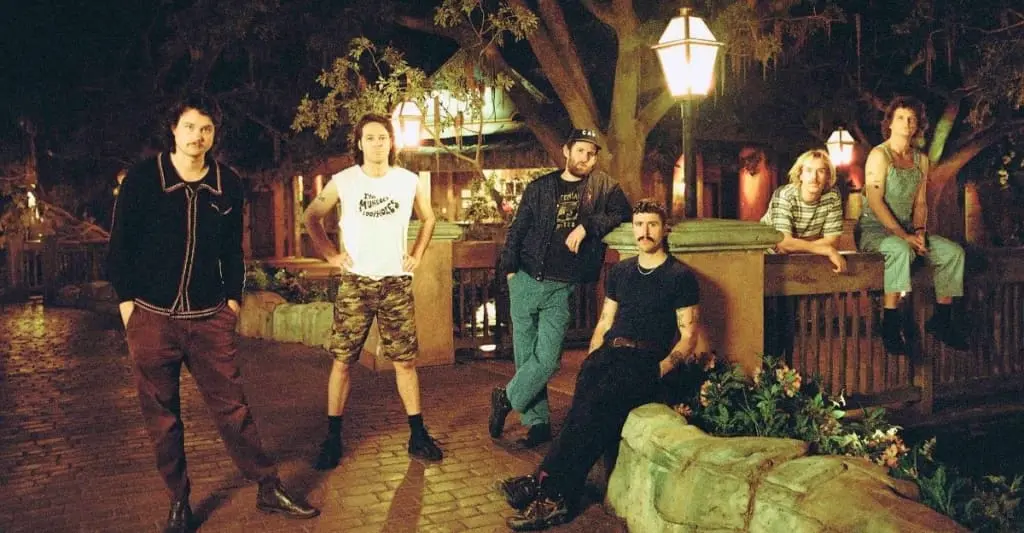
King Gizzard and the Lizard Wizard, the prolific Australian psych rock band known for their experimental sound and massive discography, have announced their intention to remove their music from Spotify. The decision comes as a direct protest against Spotify CEO Daniel Ek’s investments in Helsing, a company that develops artificial intelligence software used for military operations and decision-making. The band joins a growing list of artists who have taken a stand against what they see as the platform's complicity in the militarization of AI.
A Statement of Principle
On Saturday, the band took to Instagram to voice their frustration. In a post that included an image of Velvet Sundown—an AI-generated band that recently gained over a million monthly listeners on Spotify—King Gizzard wrote: “Fuck Spotify. Spotify CEO Daniel Ek invests millions in Al military drone technology. We just removed our music from the platform. Can we put pressure on these Dr. Evil tech bros to do better?” The blunt message reflects a deepening frustration among musicians who feel that streaming giants are prioritizing profits over ethical considerations.
Although the band’s entire catalog—encompassing 27 studio albums and more than 50 live albums—was still available on Spotify at the time of writing, a representative told The Guardian that the removal process is underway. “Their entire catalogue will be coming down,” the representative explained, “but it takes time because of the different labels and distributors involved.” The delay is typical for bands with extensive back catalogs spread across multiple record labels, streaming aggregators, and international rights holders.
A Wave of Protest
King Gizzard is not alone in this protest. Earlier this summer, the experimental indie rock duo Deerhoof announced they were pulling their music from Spotify. In a statement at the end of June, the band wrote: “We don’t want our music killing people. We don’t want our success being tied to AI battle tech.” Shortly after, the avant-garde group Xiu Xiu joined the boycott, describing Spotify as a “garbage hole violent armageddon portal” and committing to remove their catalog entirely.
These actions have reignited debates about the role of streaming platforms in funding controversial technologies. While Spotify has positioned itself as a champion of artists, its CEO’s personal investments have become a flashpoint. Daniel Ek’s involvement with Helsing began in 2021 when his investment fund Prima Materia injected $116 million into the company. Helsing specializes in AI-driven decision support systems for defense applications, including autonomous drones and battlefield intelligence. Critics argue that such technology could lead to the automation of lethal force, raising profound moral questions.
The Ethical Dilemma of AI in Warfare
The debate over AI in military contexts is not new, but it has gained urgency as companies like Helsing develop sophisticated software that can analyze battlefield data, recommend targets, and even direct drone swarms. Proponents claim that AI can reduce human casualties by making faster, more accurate decisions. Opponents warn that it lowers the threshold for conflict and may lead to unintended escalations. For musicians like King Gizzard, the connection between their art and autonomous weapons is unacceptable. They argue that by hosting their music on Spotify, they indirectly endorse Ek’s business dealings.
The band’s label and distribution network have yet to comment on the logistics of the removal. King Gizzard has directed fans to a new collection of demos now available exclusively on Bandcamp, a platform that has long been favored by independent artists for its more equitable revenue model and ethical stance. The band also hinted at a potential shift in how they release future music, possibly bypassing large streaming services altogether.
King Gizzard’s Legacy and Influence
Formed in 2010 in Melbourne, King Gizzard and the Lizard Wizard have built a reputation for relentless creativity and genre-blurring music. They have released albums spanning psychedelic rock, jazz, thrash metal, synth-pop, and microtonal experiments—often multiple albums in a single year. Their 2017 album Flying Microtonal Banana introduced the use of custom microtonal instruments, while 2019’s Infest the Rats’ Nest leaned into thrash metal. In 2023, they released three albums in a single month: PetroDragonic Apocalypse, The Silver Cord, and a demos compilation. Their live shows are legendary for their improvisational energy and marathon setlists.
The band’s decision to pull music from Spotify is significant not only because of their fanbase—which spans millions of monthly listeners on streaming platforms—but also because of their history of independent defiance. They have always owned their masters, maintained a close relationship with fans through bootlegging and community archives, and avoided major label pressures. This latest move is consistent with their ethos of artistic and political independence.
Broader Industry Reactions
The boycott by King Gizzard, Deerhoof, and Xiu Xiu has prompted discussion within the music industry about the ethics of streaming. Some observers note that Spotify’s business model already draws criticism for its low royalty payments to artists. Now, with the added controversy over AI defense investments, more artists may consider similar actions. However, for most musicians, leaving Spotify is financially risky. The platform remains the world’s largest music streaming service with over 500 million users, and removal can mean a significant loss of income and audience reach.
Spotify has not publicly responded to the boycott. The company’s press office typically refrains from commenting on individual artists’ decisions. However, sources within the company have suggested that Ek’s investments are personal and do not reflect Spotify’s corporate policies. Critics counter that the CEO’s choices inevitably shape the company’s reputation and that artists have every right to hold him accountable.
The debate also touches on larger questions about AI in creative industries. Spotify itself has invested in AI-driven personalization and content creation tools, including the controversial use of AI-generated music for relaxation and meditation playlists. The rise of Velvet Sundown—an AI band that accumulated a million listeners without human musicians—has alarmed many artists who fear that streaming platforms may eventually favor machine-made music over human artistry. King Gizzard’s protest is as much about the ethics of AI in warfare as it is about the direction of the music industry.
Historical Context: Artists and Streaming Boycotts
This is not the first time high-profile artists have boycotted Spotify. In 2014, Taylor Swift removed her entire catalog from the platform, protesting low royalty rates for artists, though she later returned her music in 2017. More recently, Neil Young and Joni Mitchell pulled their music in 2022 to protest misinformation about COVID-19 vaccines on the Joe Rogan podcast, which Spotify hosted. Those actions led to a brief but intense debate about platform responsibility. King Gizzard’s boycott adds a new dimension: the intersection of music consumption and defense technology.
For now, the band’s fans are being encouraged to support them via Bandcamp, where the new demos—tentatively titled Demos from the Psychic Warehouse—are available for purchase. The demos collection features raw, unpolished tracks that showcase the band’s creative process. As the removal process continues, listeners who rely on Spotify will have to seek out the band’s music on alternative services such as Apple Music, Tidal, or Qobuz, or purchase physical copies.
The long-term impact of this boycott remains to be seen. While King Gizzard may not disrupt Spotify’s bottom line, their moral stand could inspire other artists to examine where their streaming revenue ultimately flows. In an era where AI is rapidly transforming both the music industry and the defense sector, the line between art and ethics has never been more blurred.
Source:The FADER News