

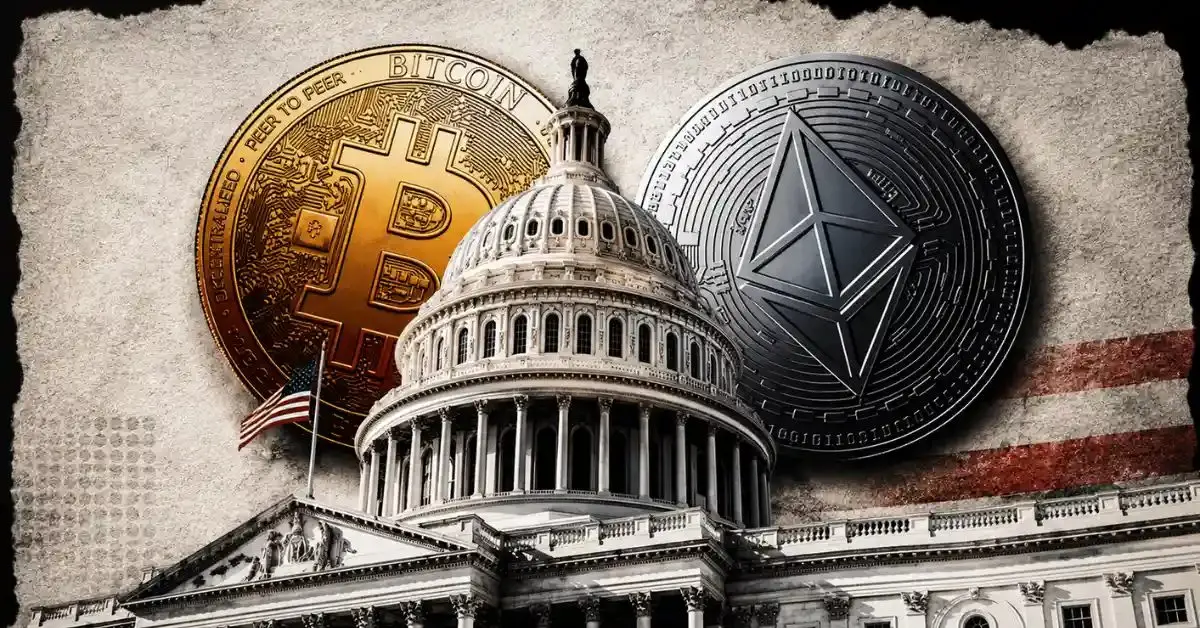
The U.S. Senate is currently navigating one of the most congested legislative calendars in recent memory, with three major policy arenas vying for precious floor time: election security bills, the farm bill, and cryptocurrency regulatory reform. At the center of the crypto debate is Senator Cynthia Lummis (R-WY), who recently provided an update on the progress of her long-awaited digital asset legislation. Lummis’s remarks come as the Senate leadership works to prioritize a slate of bills before the end of the session, raising questions about which measures will advance and which may be pushed to the back burner.
The Legislative Logjam
Every year, the Senate faces a daunting list of must-pass legislation, but the current session features an unusually high number of high-stakes bills. Election reform, prompted by ongoing debates over voting access and integrity, has emerged as a top priority for both parties. The farm bill, a massive piece of legislation renewed every five years, must be reauthorized to continue funding agricultural subsidies, nutrition programs, and rural development. Meanwhile, the cryptocurrency industry has been pressing for clarity on federal oversight, with lawmakers on both sides of the aisle acknowledging the need for a comprehensive regulatory framework.
Senator Lummis, a vocal advocate for blockchain innovation, has been spearheading the Responsible Financial Innovation Act (RFIA), which aims to provide a clear legal structure for digital assets. The bill, co-sponsored by Senator Kirsten Gillibrand (D-NY), would define which cryptocurrencies are commodities and which are securities, establish consumer protections, and address tax reporting requirements. Lummis has described the RFIA as a compromise that balances innovation with investor safety, and she has spent months building bipartisan support.
Cynthia Lummis and the RFIA
Speaking to reporters on Capitol Hill, Lummis emphasized that the crypto bill continues to gain traction, even as it competes with other pressing issues. “We’ve had productive discussions with committee leadership and members from both parties,” she said. “The technology isn’t going away, and we need to ensure that the U.S. remains a leader in this space. But we also understand that there are other important bills that require attention.” Lummis’s comments highlight the delicate balancing act lawmakers must perform as they allocate limited floor time.
The RFIA represents a significant step toward federal crypto regulation. Under its provisions, the Commodity Futures Trading Commission (CFTC) would gain primary authority over digital asset spot markets, while the Securities and Exchange Commission (SEC) would retain jurisdiction over tokens deemed securities. The bill also includes stablecoin guidelines, tax exemptions for small crypto transactions, and a requirement for studies on energy consumption and decentralized finance. Supporters argue that the bill would reduce regulatory uncertainty, while critics warn that it may not go far enough to protect investors.
Lummis’s background as a former state treasurer and her deep familiarity with financial markets have made her a credible voice on the issue. She has frequently cited the need for a bipartisan approach, noting that the RFIA incorporates feedback from industry stakeholders, consumer advocates, and regulatory agencies. The bill has been the subject of multiple hearings in the Senate Agriculture Committee, which oversees the CFTC, and the Banking Committee, which handles the SEC.
Election Bills: A Partisan Minefield
On the election front, the Senate is grappling with competing proposals aimed at securing the voting process. The For the People Act, a sweeping Democratic bill, would expand mail-in voting, mandate early voting, and reform campaign finance laws. Republicans have largely opposed it, arguing that it would federalize elections and undermine state control. Instead, the GOP has advanced the Save Democracy Act, which focuses on voter ID requirements and combating election fraud. Both bills have stalled amid partisan gridlock, leaving little room for compromise.
The timing of the election debate is critical. With the 2024 elections approaching, both parties see voting rules as a determining factor for turnout and outcomes. Senate Majority Leader Chuck Schumer (D-NY) has signaled his intention to bring election reform to the floor, but he faces resistance from moderate Democrats and the filibuster. Meanwhile, Minority Leader Mitch McConnell (R-KY) has called for a more targeted approach, warning against overreach. The clash over election bills has consumed weeks of floor time, delaying action on other matters.
Farm Bill: A Yearly Must-Pass
Another major item on the calendar is the farm bill, which expires at the end of the fiscal year. The multipurpose legislation funds agricultural subsidies, crop insurance, conservation programs, and the Supplemental Nutrition Assistance Program (SNAP). Without reauthorization, millions of Americans could face disruptions in food assistance, and farmers could lose critical safety nets. The farm bill traditionally enjoys broad bipartisan support, but this year, disagreements over work requirements for SNAP recipients and funding for climate-smart agriculture have created hurdles.
Farm state senators, including both Lummis and her colleague John Thune (R-SD), have urged leadership to prioritize the farm bill. The agricultural sector has faced volatility from trade disputes, weather extremes, and rising input costs, making the legislation a lifeline for rural communities. The Senate Agriculture Committee, led by Chair Debbie Stabenow (D-MI) and Ranking Member John Boozman (R-AR), has been working to draft a compromise that can pass both chambers. However, the dense nature of the bill means that negotiations are slow, and floor time must be carefully carved out.
Crypto Reform: A Long-Awaited Framework
Amidst these competing priorities, the push for crypto regulation remains a major focus for the financial services sector. The rise of Bitcoin, Ethereum, and other digital assets has prompted calls for legal clarity, especially after high-profile collapses like FTX and Terra. Lummis’s RFIA is one of several proposals, including the Digital Commodity Exchange Act and the bipartisan Stablecoin Trust Act, that aim to bring order to the Wild West of cryptocurrency.
The crypto industry itself is divided on the best path forward. Some companies favor light-touch regulation to foster innovation, while others argue that strict oversight is necessary to prevent fraud and protect retail investors. Lummis has attempted to strike a middle ground, emphasizing that the U.S. should not cede leadership to other nations like Singapore, the United Kingdom, or the European Union, which have already established regulatory frameworks. She has warned that without action, companies may relocate to more hospitable jurisdictions, costing the U.S. jobs and tax revenue.
Recent developments have given Lummis reason for optimism. In July, the House Financial Services Committee advanced a stablecoin bill with bipartisan support, signaling that momentum is building. Additionally, the Securities and Exchange Commission has faced criticism for its enforcement-first approach, leading some lawmakers to call for legislation that clarifies the roles of different regulators. Lummis’s office has been in constant communication with the CFTC, the Treasury Department, and the White House, working to address remaining concerns.
Outlook and Next Steps
As the Senate calendar stretches into the fall, the fate of the crypto bill remains uncertain. Leadership will need to balance the urgent need for farm bill reauthorization, the politically charged election debates, and the growing demand for digital asset regulation. Lummis has expressed hope that a consensus can emerge before the end of the year, but she acknowledges that compromises will be necessary. “We’re not going to get everything we want, but we can get something that moves the ball forward,” she said.
The crowded agenda also means that senators must be strategic about their floor time. Amendments and debates on one bill can easily consume days, leaving little room for others. The farm bill, because of its budgetary implications, is likely to receive top priority. Election reform, while important, may be delayed if a deal cannot be reached. Crypto, though a priority for many in the tech sector, may have to wait if the calendar becomes too constrained.
Senator Lummis remains undeterred. She continues to hold meetings with colleagues, industry leaders, and regulators to refine the RFIA and build a bipartisan coalition. She has also emphasized the economic and national security implications of falling behind in the digital asset race. “This is about ensuring that the U.S. dollar remains the world’s reserve currency and that our financial system remains the envy of the world,” she said. “We can’t afford to punt this down the road.”
The next few weeks will be telling. Senate leaders are expected to release a revised floor schedule that may include a block of time for crypto legislation. Meanwhile, the farm bill negotiations are entering their final stages, and election reform may be teed up for a vote if a filibuster-proof compromise can be found. For now, the Senate calendar remains a crowded battlefield, with Cynthia Lummis and her crypto bill fighting for a seat at the table.
Source:Coinpedia Fintech News News