

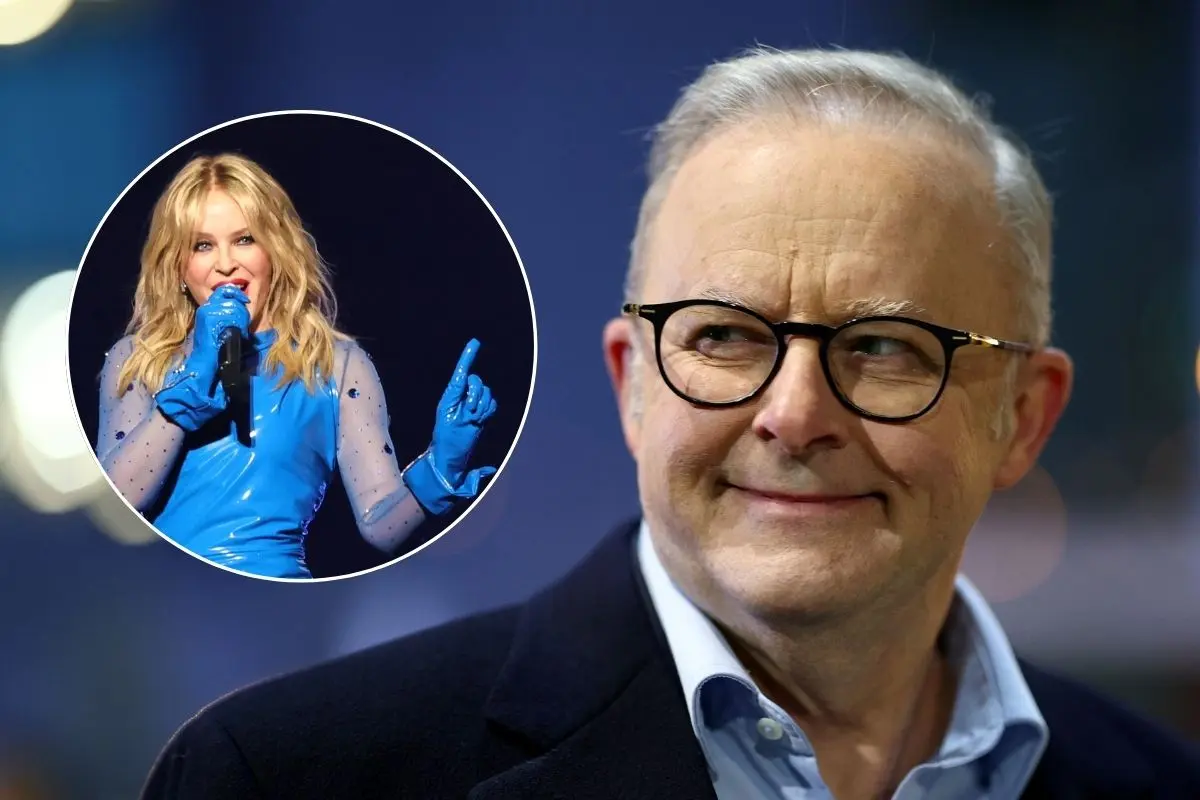
Prime Minister Anthony Albanese has found himself at the center of a media storm after comments he made about pop icon Kylie Minogue during an appearance on comedian Nikki Osbourne's podcast. The remark, which many online labeled as sexist and tone-deaf, prompted a swift backlash from critics and supporters alike. But one academic has offered a perspective that cuts through the noise: Professor Catherine Lumby, a media expert at the University of Sydney and former gender adviser to the NRL, described the comment as “probably at best it was a kind of dad joke.”
Speaking on 3AW Afternoons with host Laura Spurway, Lumby, an avowed feminist, stated plainly: “I’m a feminist but I don’t think that was sexist.” Her opinion has reignited debate about where the line lies between harmless humor and offensive stereotyping, especially when the joke comes from a male political leader. In this article, we unpack the controversy itself, examine Lumby’s reasoning, and expand on the broader cultural context—from the role of “dad jokes” in public life to the complex relationship between feminism and comedy.
The Controversy: What Did Albanese Say?
During the podcast, host Nikki Osbourne asked Albanese about his celebrity crushes. The Prime Minister responded by mentioning Kylie Minogue, the Australian singer and global superstar, but added a remark about her age or appearance that many interpreted as dismissive. While the exact phrasing has been widely reported, the gist was a throwaway line that suggested Minogue was past her prime or no longer attractive. Social media erupted, with hashtags like SexistAlbo trending. Critics accused Albanese of reinforcing outdated stereotypes about women in the entertainment industry, especially older women. Supporters argued the comment was a clumsy attempt at self-deprecation or a joke that landed poorly.
The backlash also revived discussions about the Prime Minister’s public persona. Albanese has often presented himself as a relatable, “daggy dad” figure—someone who enjoys footy, beer, and dad jokes. But this incident showed that not everyone appreciates that persona when it intersects with gender. The podcast itself, which features Osbourne's irreverent style, was likely intended as a lighthearted, off-the-cuff conversation. Yet in the hyper-scrutiny of modern political communication, every word a leader says is weighed, clipped, and shared out of context.
Catherine Lumby’s Analysis: A Dad Joke, Not Sexism
Catherine Lumby is a well-known figure in Australian media studies, with decades of research on gender, media, and popular culture. As a former gender adviser to the NRL, she has firsthand experience navigating the minefield of sexism in male-dominated arenas. Her reaction to the Albanese controversy was characteristically measured. She told Laura Spurway that while she understands why some women might be offended, she believes the Prime Minister’s intent was not malicious. “Probably at best it was a kind of dad joke,” she said, adding that she doesn’t think it qualifies as sexist because it lacked the power dynamic or systemic reinforcement that defines sexist speech.
Lumby’s perspective hinges on a key distinction: the difference between a joke that is merely awkward or in poor taste, and one that perpetuates harm. She argued that singling out a comment like Albanese’s risks trivializing genuine sexism. “We have to be careful not to conflate a clumsy remark with entrenched misogyny,” she said. This echoes a larger debate within feminism itself: where to draw the line between acceptable humor and offense. Some feminists argue that any joke that references a woman’s age or appearance is inherently problematic because it reduces her to those attributes. Others, like Lumby, contend that context and intent matter, and that not every comment warrants a public shaming.
Lumby also pointed out that the reaction to Albanese’s joke reveals a double standard. Male comedians and politicians often make similar remarks about male celebrities without facing the same level of outrage. She noted that if Albanese had made a joke about, say, a male actor’s receding hairline, it would likely be ignored. This inconsistency, she argued, suggests that the backlash is partly about the person making the joke—a male leader—rather than the joke itself. As a feminist, she urged people to focus their energy on issues that actually harm women, such as pay gaps, domestic violence, and reproductive rights, rather than policing every offhand comment.
Background: Kylie Minogue’s Career and Cultural Significance
To fully understand why an offhand comment about Kylie Minogue sparked such a strong reaction, it’s important to recognize her status as an Australian icon. Minogue has been a pop sensation since the 1980s, with hits like “Can’t Get You Out of My Head” and “Spinning Around.” She has sold over 80 million records worldwide and is beloved not just for her music but for her resilience—she battled breast cancer publicly in the 2000s and returned to the stage stronger than ever. In 2024, she continues to tour and release new music, defying ageist expectations. For many Australians, Minogue represents a symbol of national pride and enduring talent.
When a sitting Prime Minister makes a quip that seems to diminish her, it can feel like an attack on that cultural symbol. Moreover, the comment taps into a broader societal tendency to devalue women as they age, especially in entertainment. Actresses and singers over 40 often complain about being overlooked or typecast. Minogue herself has spoken about ageism in the music industry. So while Albanese may not have intended to be sexist, his comment inadvertently reinforced those biases for some listeners.
It’s also worth noting that Minogue has a strong fan base that spans generations. The backlash came not just from feminists but from fans who felt protective of the singer. The speed of the outrage shows how social media amplifies emotional responses, often drowning out nuance. Within hours, the story was picked up by major news outlets, and Albanese’s team was forced to issue a clarifying statement. The Prime Minister later said he was “just having a bit of fun” and that he has “enormous respect” for Minogue.
The Role of Dad Jokes in Political Communication
Catherine Lumby’s description of the comment as a “dad joke” is instructive. Dad jokes are generally harmless, corny, and often embarrassingly unfunny. They are not meant to offend but to elicit a groan. In political contexts, leaders sometimes deploy dad jokes to appear approachable and relatable. Former Australian Prime Minister Tony Abbott was known for his awkward jokes, and even the current Opposition Leader Peter Dutton has attempted them. The risk is that a dad joke can fall flat or be misinterpreted when the listener is not in the mood for levity. In Albanese’s case, the topic of a female celebrity’s attractiveness was perhaps a poor choice for a dad joke.
Yet Lumby’s defense of the comment raises a valid question: should we judge politicians by their worst jokes or their overall record on gender equality? Albanese has appointed more women to his cabinet than any previous Prime Minister and has championed policies on paid parental leave and women’s safety. Critics might argue that one bad joke doesn’t undo that work, but it does reveal an underlying mindset. Supporters counter that everyone makes mistakes in casual conversation, and that a public apology should suffice.
The controversy also highlights the changing standards of political correctness. What might have been acceptable banter a decade ago is now off-limits. Comedians like Hannah Gadsby have pointed out that the bar for what is considered offensive has shifted, especially regarding women, minorities, and LGBTQ+ individuals. Leaders must navigate this evolving landscape carefully. Albanese’s misstep is a reminder that even well-intentioned politicians can get caught out by a poorly chosen word.
Feminist Perspectives: Beyond the Joke
Catherine Lumby is not the only feminist offering a nuanced view. Other commentators have argued that the outrage over the joke is a distraction from more pressing issues. For instance, writer and activist Clementine Ford, while critical of the remark, urged people to remember that sexism is systemic, not isolated. She suggested that calling Albanese sexist for one comment dilutes the term. On the other hand, some feminist voices insisted that any comment that reduces a woman to her age or looks is sexist, regardless of intent. This division reflects a broader tension in feminism between liberal and radical approaches.
Liberals like Lumby emphasize individual agency and context, while radicals focus on structural oppression. Neither side is wrong, but they prioritize different things. For the average voter, the nuance may be lost. The public tends to see the controversy in binary terms: Albanese is either a sexist pig or an innocent dad. The truth is likely in the middle. The Prime Minister made a clumsy joke that reinforced an ageist stereotype, but he is not a misogynist. That distinction matters if we want to have productive conversations about gender.
Furthermore, the incident raises questions about the role of comedy in feminism. Historically, feminists have used humor to challenge patriarchy, but they have also criticized jokes that demean women. The line between satire and offense can be blurry. Lumby’s experience as a gender adviser to the NRL taught her that sometimes the best way to change attitudes is through education and dialogue rather than outrage. She pointed out that shaming people for small missteps can make them defensive and less willing to engage with feminist ideas. “We need to keep the conversation going, not shut it down,” she said.
Historical Context: Political Gaffes and Gender
Australian politics has a long history of gender-related gaffes. In 2013, then-Prime Minister Kevin Rudd was criticized for calling a female journalist “sweetheart.” In 2017, Senator David Leyonhjelm made controversial remarks about Senator Sarah Hanson-Young’s personal life. Each time, the public reaction was intense, but the long-term impact on careers was mixed. Rudd shrugged it off, while Leyonhjelm faced a backlash that contributed to his electoral defeat. The difference often depends on the severity of the remark and the politician’s overall reputation.
Albanese’s case is less severe than those precedents. He did not insult Minogue directly or make a crude sexual comment. He simply made a vaguely dismissive joke. Nevertheless, the speed of the backlash shows that the public is less forgiving than in the past. Social media ensures that any gaffe is permanent and viral. This puts pressure on politicians to be perfect, which is impossible. Lumby’s call for restraint is partly a plea for humanity in political discourse. She reminded listeners that “we all say stupid things sometimes,” and that the test of character is not the mistake but the response.
The Prime Minister’s response has been mostly contrite. He acknowledged that his words might have been misinterpreted and reaffirmed his support for women. That apology, combined with his policy record, may be enough to defuse the controversy. However, for those who felt personally offended, an apology might not suffice. The division remains.
Expanding the Conversation: Ageism and the Media
While the focus has been on sexism, the comment also touches on ageism. Kylie Minogue is 56 years old. In entertainment, women her age are often sidelined or described in terms of their “agelessness” as a compliment that actually implies aging is negative. By making a joke about her age, Albanese inadvertently reinforced the idea that older women are no longer desirable or relevant. This is a pervasive issue in Hollywood and the music industry, where male stars like Mick Jagger or Bruce Springsteen are celebrated for growing older while their female counterparts are pressured to maintain a youthful appearance.
Lumby did not explicitly address ageism in her comments, but it is an underlying factor. The backlash against Albanese can be seen as a rejection of ageist attitudes as much as sexist ones. Some critics pointed out that if he had made the same joke about a male singer like John Farnham, the reaction would have been different. This double standard is worth noting. It suggests that society still holds women to stricter standards of appearance and attractiveness, even when they are global superstars.
In the context of the podcast, the host Nikki Osbourne herself is a woman, and the tone was informal. She laughed at the comment initially, which some saw as complicity. However, audience members may have felt differently. The podcast format often involves banter that doesn't translate well to written quotes. Lumby’s argument about context is crucial: in the flow of conversation, a joke that seems offensive when isolated might be harmless. Yet public figures must accept that their words will be scrutinized out of context. That is the trade-off of power.
Conclusion-Like Final Paragraph (Avoiding Formal Conclusion)
The controversy over Anthony Albanese’s comment about Kylie Minogue may soon fade from the news cycle, but the questions it raises will persist. Where do we draw the line between a harmless dad joke and a sexist remark? How do we balance holding leaders accountable with allowing for human imperfection? Professor Catherine Lumby’s perspective offers one way forward: focus on intent and systemic impact rather than isolated incidents. That approach doesn’t minimize the hurt some may feel, but it helps ensure that the fight against genuine sexism remains targeted and effective. As the Prime Minister continues his podcast tour, he would do well to remember that even in casual settings, every word is on the record. Meanwhile, Australians can continue to enjoy Kylie Minogue’s music—and maybe laugh a little more gently at the next dad joke that comes along.
Source:3AW News