

Introduction
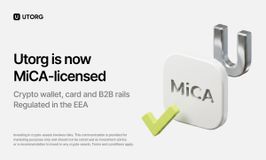
In a significant development for the European cryptocurrency landscape, Utorg, a prominent digital asset platform, has announced that it has successfully obtained a license under the Markets in Crypto-Assets (MiCA) regulation. This achievement comes just ahead of the July 1 deadline, which has prompted a mass exodus of crypto firms from the European Union due to stringent compliance requirements. The license positions Utorg as one of the few entities able to legally offer cryptocurrency services across all EU member states, marking a pivotal moment for regulatory adherence in the region.
Understanding MiCA Regulation
The Markets in Crypto-Assets regulation, adopted by the European Parliament in April 2023, is a comprehensive legal framework designed to govern the issuance and trading of crypto assets within the EU. MiCA aims to protect investors, promote market integrity, and ensure financial stability by establishing clear rules for crypto asset service providers, including exchanges, wallet providers, and issuers of stablecoins. One of its key provisions is the requirement for all crypto firms operating in the EU to obtain a license by June 30, 2024, or cease operations. The regulation covers a wide range of digital assets, from cryptocurrencies like Bitcoin and Ethereum to utility tokens and asset-referenced tokens. For stablecoins, MiCA imposes additional obligations, such as maintaining adequate reserves and obtaining authorization from the European Banking Authority.
Utorg's Strategic Move
Utorg, known for its fiat-to-crypto on-ramp services and user-friendly platform, has been preparing for MiCA compliance for months. By securing the license early, the company not only ensures uninterrupted operations but also gains a competitive edge. The license allows Utorg to passport its services across all 27 EU member states under a single regulatory approval, eliminating the need for multiple national licenses. This is a significant advantage as many competitors have chosen to withdraw from the European market rather than comply with the costly and complex requirements. For example, several major exchanges, including Binance and Kraken, have scaled back their EU operations or restructured their offerings to meet MiCA standards. Utorg's proactive approach demonstrates a commitment to regulatory transparency and long-term sustainability in the region.
Impact of the July 1 Deadline
The July 1 deadline has created a turbulent environment for the crypto industry in Europe. Firms that failed to obtain a license before this date are required to stop servicing EU clients, leading to a wave of market exits and relocations to jurisdictions with lighter regulations, such as Switzerland, the United Arab Emirates, and Singapore. This regulatory cliff has also caused uncertainty among investors and users, who now face limited options for compliant trading platforms. The European Securities and Markets Authority has warned that unauthorized services will face enforcement actions, including fines and sanctions. Consequently, the deadline has accelerated a consolidation trend, with only well-capitalized and compliant entities surviving. Utorg's license acts as a seal of approval, reassuring customers that their assets are handled within a regulated framework.
Broader Implications for the Crypto Ecosystem
MiCA is often hailed as a global benchmark for crypto regulation, influencing policymakers in the United States, Asia, and beyond. The EU's approach balances innovation and consumer protection, providing a clear legal environment for businesses to grow. For Utorg, the license opens doors to partnerships with traditional financial institutions, which have been hesitant to engage with unregulated crypto firms. Banks and payment providers are more likely to collaborate with licensed entities, improving liquidity and accessibility for users. Moreover, the license enhances Utorg's credibility in the eyes of institutional investors, who require regulatory clarity before deploying capital. As the crypto market matures, compliance will become a key differentiator, and early adopters like Utorg are well-positioned to capture market share.
Challenges and Opportunities Ahead
Despite the milestone, Utorg faces ongoing challenges. MiCA compliance involves continuous reporting, audits, and adherence to anti-money laundering (AML) and counter-terrorism financing (CTF) obligations. The regulation also requires firms to segregate client funds, maintain robust cybersecurity measures, and disclose risks transparently. These requirements increase operational costs but also raise the bar for industry standards. On the positive side, Utorg can now leverage its licensed status to expand its product offerings, such as staking, lending, and tokenized assets, within the EU. The company has hinted at plans to launch new services that comply with MiCA's innovative framework, including a regulated stablecoin and an institutional-grade custody solution. This could attract a broader user base, from retail investors to large corporations.
Historical Context of Crypto Regulation in Europe
Europe has been at the forefront of crypto regulation since the early 2010s, but the landscape was fragmented across member states. For example, Germany required a banking license for crypto custody under the German Banking Act, while France introduced its own optional framework for digital asset service providers. MiCA harmonizes these rules, creating a single market for crypto assets. The journey to MiCA began in 2020 with the European Commission's Digital Finance Package, culminating in the final text published in June 2023. The regulation is part of a broader strategy to foster digital innovation while mitigating risks associated with volatility, illicit finance, and market abuse. Utorg's license is a testament to the efficacy of this harmonized approach, showing that firms can meet diverse requirements through a unified system.
Comparison with Other Jurisdictions
While MiCA is stringent, it is not unique. The United Kingdom has proposed its own regulatory regime for crypto activities, and the United States is gradually developing a patchwork of state and federal guidelines. However, the EU's comprehensive nature sets it apart. For instance, MiCA's provisions on stablecoins are particularly detailed, requiring issuers to hold reserves in safe assets and obtain approval from the European Banking Authority. This contrasts with the approach in Asia, where regulators like the Monetary Authority of Singapore have implemented licensing requirements but allow more flexibility for innovation. Utorg's decision to embrace MiCA positions it favorably in the global regulatory environment, as it can serve as a gateway for international users seeking a compliant European platform. The license also enables Utorg to participate in the European Commission's pilot regime for distributed ledger technology (DLT) market infrastructure, which could further enhance its capabilities.
Market Reaction and Industry Response
The announcement of Utorg's MiCA license has been met with positive reactions from industry analysts and user communities. Many see it as a signal that regulatory compliance is achievable and beneficial. Competitors that are still in the licensing process may accelerate their efforts to avoid being left behind. Additionally, the news has boosted confidence in the European crypto market, which had been dampened by the exodus of major players. Trading volumes on Utorg's platform have reportedly increased since the license announcement, indicating user trust. However, some critics argue that MiCA imposes excessive burdens on smaller firms, potentially stifling innovation. Utorg's success demonstrates that with proper resources and planning, the regulation can be navigated successfully, setting an example for others to follow.
Technical and Operational Aspects of Compliance
To obtain the MiCA license, Utorg underwent a rigorous application process that included a detailed business plan, proof of sound governance structures, and demonstration of technical capabilities. The company had to implement advanced security protocols, such as multi-signature wallets and real-time transaction monitoring systems. It also established a dedicated compliance team to handle AML/CTF obligations, including customer due diligence and suspicious activity reporting. Utorg's leadership emphasized that the license required significant investment in legal and technological infrastructure, but the long-term benefits outweigh the costs. The platform now operates under the supervision of a designated national competent authority, likely the Dutch Central Bank or the French Financial Markets Authority, depending on its home member state. This oversight ensures ongoing compliance and accountability.
Future Outlook for Utorg and the European Crypto Space
Looking ahead, Utorg plans to leverage its MiCA license to expand into new markets and services. The company is exploring the issuance of a regulated euro-backed stablecoin, which would compete with Circle's USDC and other regulated stablecoins. Additionally, it aims to offer crypto derivatives trading under the revised Markets in Financial Instruments Directive (MiFID II) framework, which overlaps with MiCA for certain tokenized assets. The European crypto ecosystem as a whole is expected to mature as more licenses are granted. By the end of 2024, the European Securities and Markets Authority will publish a list of all authorized crypto asset service providers, giving users a clear choice of compliant platforms. Utorg's early license positions it as a pioneer in this new regulatory era, and its success could inspire similar moves by other firms that had previously hesitated to engage with the EU market.
Utorg's journey underscores the importance of regulatory foresight in the volatile crypto industry. While the July 1 deadline has caused disruption, it has also created opportunities for companies that prioritize compliance. As the crypto world continues to evolve, the MiCA license will likely become a standard requirement for operating in Europe, much like the banking license is for traditional financial institutions. Utorg's achievement is not just a corporate milestone but a signal that the industry is moving toward greater legitimacy and integration with mainstream finance.
Source:The Daily Hodl News