

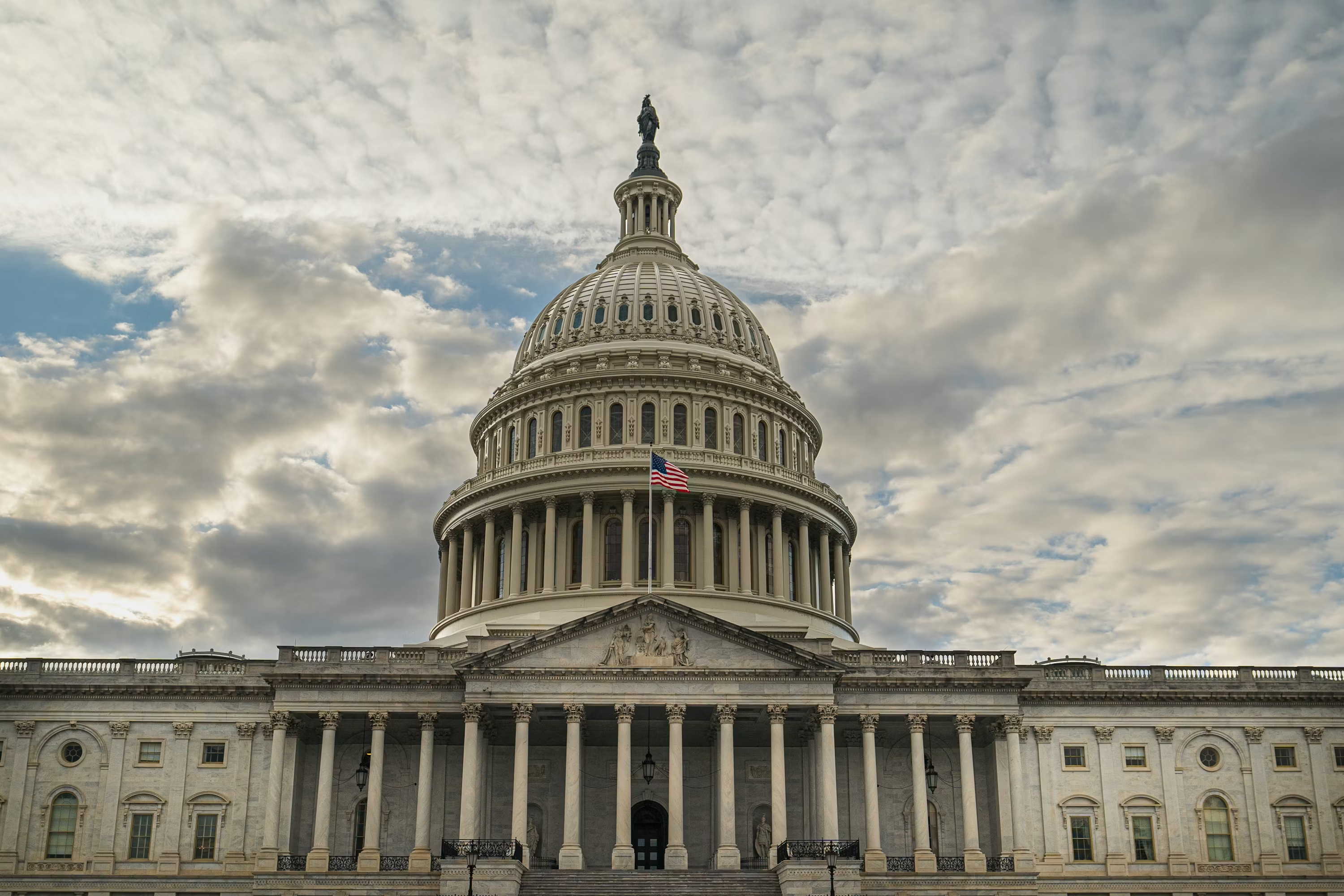
In a dramatic escalation of the ongoing friction between the cryptocurrency industry and traditional financial media, Binance, the world's largest cryptocurrency exchange, has filed a defamation lawsuit against The Wall Street Journal. The legal action stems from an article published by the newspaper that Binance claims contained false and misleading statements, severely damaging its reputation. The lawsuit has not only rattled the crypto community but has also drawn the attention of the United States Congress, which is now seeking explanations from both the exchange and the media outlet.
Background: The Genesis of the Dispute
The conflict began with a Wall Street Journal report that allegedly accused Binance of engaging in practices that violated U.S. sanctions and anti-money laundering regulations. According to the exchange, the article improperly suggested that Binance deliberately facilitated transactions for entities under U.S. sanctions, including Russian oligarchs and Iranian companies. Binance firmly denies these allegations, stating that the report was based on outdated and incomplete information, and that the exchange has always complied with international laws and regulations.
Binance’s legal team argued that the article was not only factually incorrect but also maliciously intended to harm the exchange’s business, citing a pattern of negative coverage by the publication. The lawsuit was filed in a federal court in the United States, seeking unspecified damages for defamation, trade libel, and business disparagement. The exchange also demanded a retraction and a public apology, which the Wall Street Journal has so far refused to issue.
Congress Steps In: A Demand for Transparency
Shortly after the lawsuit was made public, members of the U.S. House Financial Services Committee sent letters to both Binance and the parent company of The Wall Street Journal, Dow Jones & Company. In these letters, lawmakers requested detailed information about the events leading up to the lawsuit, including the exact nature of the article’s claims, the evidence Binance used to support its allegations, and any correspondence between the exchange and the newspaper prior to the filing. The committee also expressed concern about the broader implications of the case for media accuracy and the regulation of digital assets.
“The American public deserves to know the truth behind the headlines, especially when it involves a major financial institution and a leading news organization,” said a committee spokesperson. “We are committed to ensuring that both sides are held accountable and that the facts are brought to light.” The congressional inquiry has added a significant layer of pressure on both parties, with the potential to influence not only the outcome of the lawsuit but also future regulatory frameworks for cryptocurrency exchanges.
Detailed Analysis: The Legal and PR Battle
The lawsuit is a high-stakes gamble for Binance, which has faced increasing regulatory scrutiny around the world. In the United States, the exchange has been under investigation by the Securities and Exchange Commission (SEC) and the Commodity Futures Trading Commission (CFTC) for allegedly offering unregistered securities and violating trading rules. While Binance maintains that it operates in a legal and compliant manner, the negative press coverage has undoubtedly hurt its image among institutional investors and regulators.
From a legal perspective, defamation cases against media organizations are notoriously difficult to win, especially in the United States, where the First Amendment protects freedom of the press. To succeed, Binance would need to prove that the Wall Street Journal acted with “actual malice,” meaning that the newspaper knew the information was false or recklessly disregarded the truth. This is a high bar, requiring clear evidence of intentional wrongdoing or gross negligence. Legal experts are divided on the strength of Binance’s case, with some suggesting that the exchange may have a better chance of settling the matter out of court rather than risking a public trial.
On the public relations front, the lawsuit has generated mixed reactions. Supporters of Binance argue that the exchange is standing up against media bias and protecting its reputation from baseless attacks. Critics, however, view the lawsuit as a strategic move to silence investigative journalism and intimidate journalists who cover the crypto industry. The involvement of Congress adds a new dimension, turning a private legal dispute into a public policy debate.
Broader Implications for Crypto Regulation and Media
This case is unfolding at a critical time for the cryptocurrency industry, as governments around the world grapple with how to regulate digital assets. The outcome of Binance’s lawsuit could set a precedent for how media organizations report on crypto companies and the level of scrutiny they can apply without facing legal repercussions. If Binance wins, it may embolden other crypto firms to sue media outlets for negative coverage, potentially chilling investigative journalism in the sector. Conversely, if the Wall Street Journal prevails, it could reinforce the importance of press freedom and encourage more rigorous reporting on potentially illegal activities in the crypto space.
Meanwhile, Congress’s interest in the matter signals that lawmakers are closely watching the relationship between the media and the crypto industry. Some legislators have called for new laws to ensure that financial reporting is accurate and that companies have a fair opportunity to defend themselves against false claims. Others warn against government overreach, arguing that the press should be free to report on matters of public interest without fear of litigation or political interference.
Historical Context: Binance’s Rise and Regulatory Scrutiny
To fully understand the significance of this lawsuit, it is helpful to look at Binance’s history. Founded in 2017 by Changpeng Zhao (commonly known as CZ), Binance quickly grew from a small startup into the world’s largest cryptocurrency exchange by trading volume. Its success was driven by an aggressive expansion strategy, offering a wide range of trading pairs, low fees, and innovative products like futures and options. However, the exchange’s rapid growth also attracted regulatory attention, particularly because it initially operated without a fixed headquarters and often skirted local laws.
Over the years, Binance has faced regulatory actions in many countries, including the United Kingdom, Japan, Germany, and Canada. In response, the exchange has made efforts to improve compliance, hiring former regulators and establishing regional offices. Despite these moves, skepticism remains, and the Wall Street Journal’s report tapped into existing concerns about Binance’s ties to China and its alleged willingness to prioritize growth over legal compliance. The lawsuit is thus partly an attempt to refute these long-standing suspicions and restore trust among users and authorities.
The Wall Street Journal’s Position and Defense
The Wall Street Journal has defended its reporting, stating that the article was based on thorough research and interviews with multiple sources. In a public statement, the newspaper said, “We stand by our story and will vigorously defend against this lawsuit. Our journalists operate with the highest ethical standards, and we are confident that the facts will support our reporting.” The publication also rejected Binance’s claims of malice, arguing that the article was a legitimate piece of investigative journalism that served the public interest.
Legal analysts note that the Wall Street Journal’s defense will likely rely on the accuracy of its sources and the importance of reporting on potential violations of U.S. sanctions. If the newspaper can demonstrate that its reporting was based on credible evidence, even if some details were later disputed, it may be able to defeat the defamation claim. However, the discovery process could be lengthy and may uncover internal communications that could damage Binance’s reputation further.
Congressional Response: What Lawmakers Want to Know
The letters sent by the House Financial Services Committee to Binance and Dow Jones request a range of documents, including the full text of the article before publication, communications between the publication and its sources, and any internal reviews or audits conducted by Binance regarding the allegations. Lawmakers are also interested in whether the Wall Street Journal had previously reported on Binance and whether there was any coordination between the article and U.S. regulatory agencies. The committee has given both parties a deadline of 30 days to respond, after which it may consider holding hearings or issuing subpoenas.
This congressional inquiry is unprecedented in the context of a defamation lawsuit involving a crypto company. It reflects the growing interest of U.S. lawmakers in the cryptocurrency industry and their desire to ensure that both the media and crypto firms are held to high standards of truth and transparency. Some experts believe that the outcome of this inquiry could influence the timing and content of future crypto legislation in the United States.
Industry Reactions and Market Impact
The cryptocurrency industry has reacted with a mix of support and caution. Some industry leaders have praised Binance for taking a stand against what they perceive as biased reporting. “The media has been unfairly targeting crypto companies with sensationalized stories,” said a blockchain advocacy group in a statement. “This lawsuit sends a message that we will not tolerate misinformation.” Others, however, worry that the lawsuit could have a chilling effect on legitimate investigative journalism, making it harder for reporters to uncover potential misconduct in the crypto space.
The market impact of the lawsuit has been relatively muted so far, with Bitcoin and other major cryptocurrencies trading within their usual ranges. However, some analysts suggest that if the legal battle drags on, it could create uncertainty for Binance’s users and investors. Binance’s native token, BNB, experienced a slight dip after the news broke but has since recovered. Long-term, the case could affect Binance’s ability to secure banking partnerships and regulatory approvals in key markets.
Looking Ahead: Possible Outcomes and Scenarios
The lawsuit and congressional inquiry are in their early stages, and several scenarios are possible. One possible outcome is that the court dismisses Binance’s case on summary judgment, finding that the Wall Street Journal’s article was substantially true or protected under the First Amendment. Another possibility is that the case proceeds to trial, where a jury would decide whether the newspaper acted with actual malice. There is also a chance that the parties settle out of court, with the Wall Street Journal agreeing to publish an update or clarification without admitting fault.
On the congressional front, the committee could decide to hold public hearings, inviting executives from both Binance and Dow Jones to testify. Such hearings would likely attract widespread media attention and could become a platform for lawmakers to push for new regulations on cryptocurrency reporting or on the exchanges themselves. Alternatively, the committee might conclude that the matter is best left to the courts and drop its inquiry. Regardless, the case has already highlighted the complex intersection of media, finance, and technology in the digital age.
As the legal and political processes unfold, both Binance and the Wall Street Journal face significant reputational risks. For Binance, the lawsuit is a high-profile attempt to defend its integrity, but it also exposes the exchange to further scrutiny of its operations. For the Wall Street Journal, the legal defense will test the resilience of its journalistic standards and could affect its credibility if any missteps are uncovered. The involvement of Congress adds unpredictability, making this one of the most closely watched legal disputes in the cryptocurrency industry.
Source:Bitcoinist.com News