

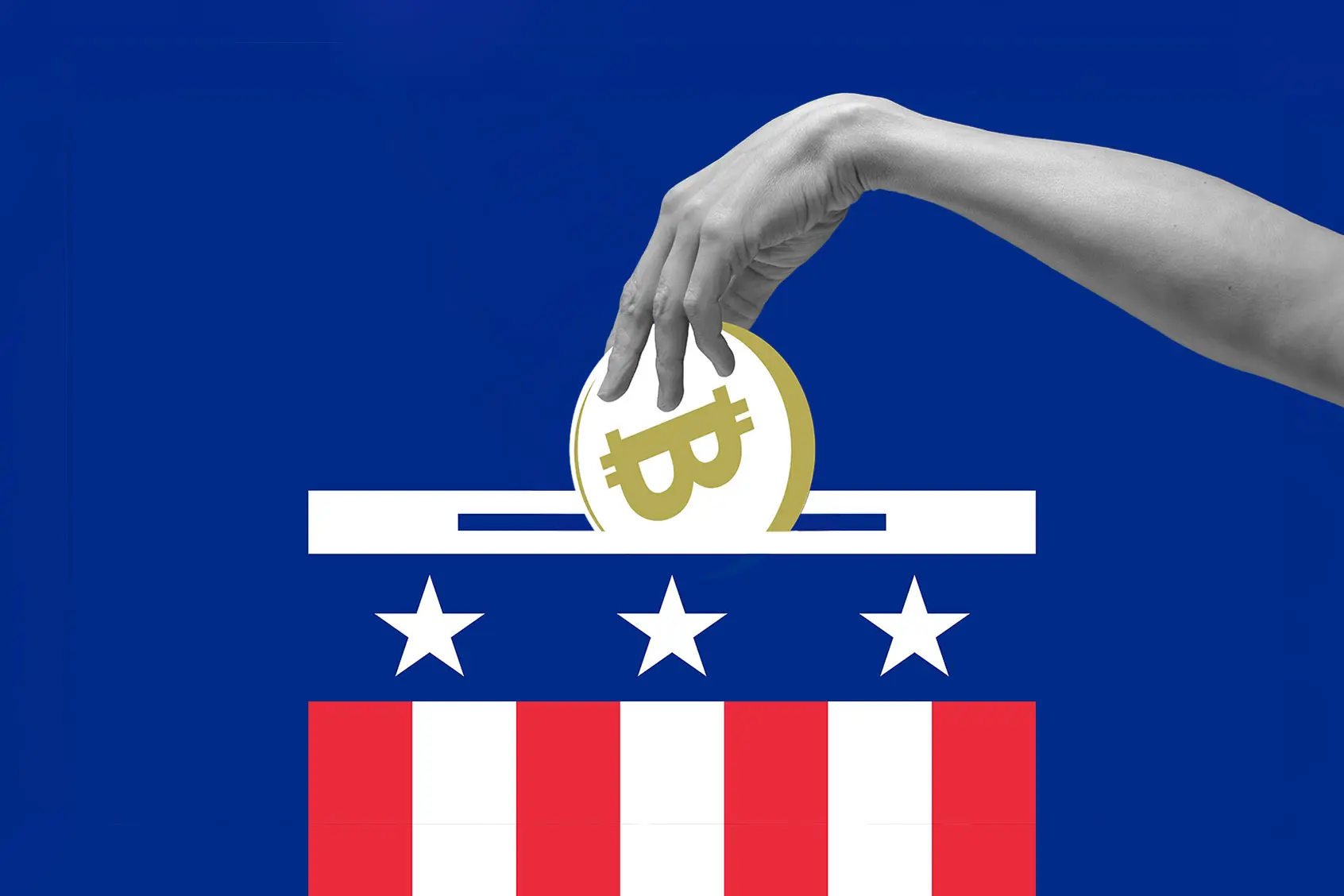
The influence of cryptocurrency on American politics has reached a new milestone as political action committees (PACs) backed by digital asset interests have spent a combined $7.2 million across five states in recent election cycles. These expenditures, disclosed in federal filings, underscore the rapid mobilization of crypto-friendly donors who are seeking to shape legislative and regulatory outcomes at both the state and federal levels. The money is flowing through super PACs, which can raise unlimited funds from corporations, unions, and individuals, provided they do not coordinate directly with campaigns.
Among the states targeted are Ohio, California, New York, Texas, and Florida, each representing key battlegrounds for crypto policy. In Ohio, for instance, a super PAC called “Crypto Freedom PAC” has spent over $2 million to support a Senate candidate who has publicly advocated for blockchain innovation and opposed strict regulations. Similarly, in California’s 12th congressional district, ads funded by crypto donors have attacked an incumbent who sponsored legislation to require digital asset exchanges to obtain money transmitter licenses, arguing it would stifle innovation.
The $7.2 million figure is part of a larger trend of increasing political spending by the crypto industry. According to data from the Center for Responsive Politics, the sector’s political contributions have surged from less than $1 million in the 2020 cycle to over $50 million projected for 2024. This growth mirrors the rise of other industry-specific super PACs, such as those for renewable energy or pharmaceutical companies, but the crypto sector’s involvement is particularly notable given its relatively young age and the regulatory uncertainty surrounding digital assets.
One of the key drivers of this spending is the desire to influence the passage of regulatory frameworks. For example, the “Digital Asset Market Structure Act” currently under consideration by congressional committees could fundamentally alter how cryptocurrencies are taxed and traded. Proponents argue that clear rules will foster innovation and protect consumers, while opponents warn that overly permissive laws could enable fraud and market manipulation. Super PAC spending aims to elect lawmakers who will side with industry interests on such bills.
The five states where the $7.2 million was spent also reflect strategic targeting. In Texas, where the state legislature has considered bills to create a blockchain working group and exempt certain crypto transactions from securities laws, crypto PACs have funded attack ads against state representatives who voted against these measures. In Florida, where Governor Ron DeSantis has expressed support for digital assets, contributions have gone to candidates who align with his pro-crypto stance. New York, on the other hand, has seen a flurry of spending in races for state assembly positions, as the state has implemented some of the strictest crypto regulations in the U.S., including a moratorium on proof-of-work mining.
The use of super PACs allows donors to remain anonymous in many cases, as these committees are often funded by nonprofits that do not disclose their contributors. This opacity has drawn criticism from good-government groups, who argue that voters deserve to know who is funding political messages. The Federal Election Commission has struggled to keep pace with the rise of digital asset donations, which can be sent instantly across borders and may not be subject to the same reporting requirements as traditional currency contributions. The crypto industry, however, maintains that its involvement in politics is a legitimate exercise of free speech and that transparency measures can be developed over time.
Historical context is important to understand this development. Campaign finance in the United States has evolved dramatically since the Supreme Court’s 2010 Citizens United decision, which allowed corporations and unions to spend unlimited sums on independent political expenditures. Super PACs emerged as a result, and industries such as finance, energy, and healthcare quickly leveraged them. The cryptocurrency sector, which came of age in the aftermath of the 2008 financial crisis, is now following a similar playbook. Early examples include the 2022 midterm elections, where crypto PACs spent about $12 million, mostly in support of pro-crypto candidates. The current $7.2 million across five states represents a more focused effort ahead of the 2024 primaries.
Another layer to the story is the diversity of cryptocurrency interests. Not all crypto companies share the same policy goals. For instance, centralized exchanges like Coinbase have pushed for a federal regulatory framework that would preempt state-by-state rules, while decentralized finance (DeFi) proponents favor minimal regulation that preserves anonymity. Super PACs often pool contributions from multiple entities, so the $7.2 million likely reflects a coalition of goals. The spending has also included measures to counter ballot initiatives that would tax crypto mining or restrict personal wallets.
The impact on actual election outcomes remains to be seen. Studies have shown that heavy outside spending can influence close races, particularly in low-information primaries where voter turnout is low. In the five states examined, several contests are already being decided by narrow margins. For example, in a California State Assembly race, the crypto-backed candidate defeated a more experienced opponent by only 512 votes out of over 40,000 cast. That race saw $1.8 million in outside spending, mostly from the crypto PAC.
Opponents of the influx of crypto money argue that it creates a conflict of interest: the same entities that benefit from weaker regulations are helping to elect the officials who would write those regulations. They point to instances where PACs have funded both sides of the same race to ensure access regardless of the winner—a practice known as “hedging.” In one Ohio contest, a crypto PAC contributed to both the Democratic and Republican primary campaigns, leading to questions about its true allegiances.
As the 2024 election cycle approaches, the spending is expected to accelerate. Several crypto advocacy groups have promised to raise at least $100 million for political activities, dwarfing the current $7.2 million figure. The states targeted now may be just the beginning. Federal candidates are also receiving direct contributions from individuals in the crypto space, though those are limited by law. The combination of super PAC spending and individual donations is creating a powerful pipeline for digital asset influence.
Technology and cryptocurrency are inherently global, but U.S. regulatory decisions have outsized impacts due to the size of the American market. Therefore, the political investment makes strategic sense for the industry. Companies like Ripple and Circle have established government affairs offices in Washington, D.C., while trade groups like the Blockchain Association lobby for favorable policies. The super PAC spending is merely the most visible part of a broader effort that includes campaign donations, lobbying, and public relations campaigns.
The $7.2 million across five states also highlights geographic disparities. States with large tech sectors, such as California and Texas, attract more attention because their legislatures often set precedents for other states. Meanwhile, states like Ohio and Florida are home to major crypto conferences and mining operations, respectively. The spending in New York reflects the high stakes of that state’s climate-focused crypto mining moratorium, which has been challenged in court by industry advocates.
Consumer protection is another angle. Critics of crypto PACs worry that too much industry influence could lead to laws that weaken safeguards for retail investors. For instance, some proposed bills would reduce liability for crypto exchanges in cases of hacks or theft, and PAC spending aims to advance those provisions. Conversely, proponents argue that reasonable regulations will bring more institutional money into the space, increasing liquidity and reducing volatility.
The Federal Election Commission’s ability to track crypto donations is limited because many contributions are made in cryptocurrency, which can be converted to fiat and donated, but the original source may be obscured. The FEC has issued advisory opinions allowing crypto contributions under certain conditions, but enforcement has been sparse. This regulatory gap is something that the PACs are exploiting, and it may become a campaign issue in itself.
In sum, the $7.2 million in crypto-backed PAC spending across five states represents a strategic and coordinated effort by the cryptocurrency industry to shape U.S. politics at a critical juncture. As states and the federal government grapple with how to regulate digital assets, the money flowing into campaigns is likely to increase, raising questions about transparency, ethics, and the future of electoral influence by emerging technologies.
Source:Bitcoinist.com News