

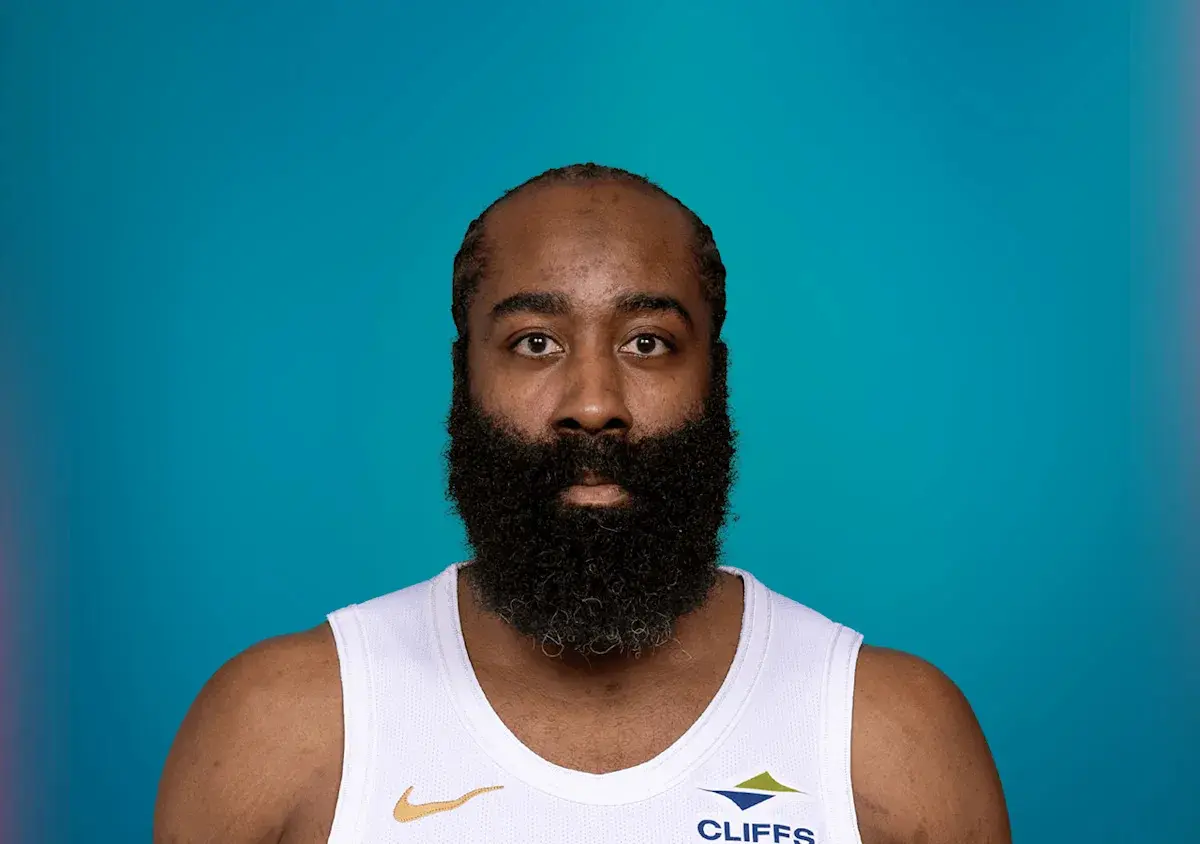
In a postseason defined by intense competition and high stakes, James Harden's recurring struggles have become a glaring subplot. The veteran guard, once an MVP-caliber scorer, now finds himself trapped in an unenviable statistical pattern: finishing playoff games with more turnovers than made field goals. According to a recent observation, this marks the 31st time in Harden's playoff career that he has achieved this dubious milestone, and the fifth time during the current postseason alone. The numbers paint a stark picture of a player whose offensive efficiency has eroded under the pressure of playoff basketball.
To understand the gravity of this trend, one must look at the context of Harden's illustrious career. From his early days with the Oklahoma City Thunder to his peak years with the Houston Rockets, Harden was renowned for his scoring prowess, playmaking, and ability to control the pace of a game. However, the playoffs have often been a different story, with increased defensive intensity and game-planning exposing weaknesses in his game. The 31 instances of more turnovers than field goals represent a significant portion of his postseason appearances, underscoring a pattern that has persisted across multiple teams and series.
The Breakdown of the Stat
The stat itself is straightforward: in a single playoff game, a player can either have more turnovers or more made field goals. For most elite scorers, the latter is almost always the case. For Harden, the ratio has tipped the wrong way repeatedly. In the 2026 playoffs alone, this has happened five times, including a particularly rough outing in Game 2 of the Cavaliers' series against the Detroit Pistons. In that game, Harden struggled to find his rhythm from the field, shooting well below his season average, while committing a flurry of turnovers that allowed the Pistons to build momentum. The final box score showed more turnovers than made baskets, a statistic that rarely accompanies a positive result for his team.
This trend is not new. Harden's playoff history is littered with games where his shooting percentage drops and his turnover rate spikes. In fact, over his career, his playoff turnover rate is significantly higher than his regular season mark. This is partly due to the increased physicality and defensive schemes that target him as the primary ball-handler. Teams often double-team him, force him to make quick decisions, and exploit his tendency to hold the ball for extended periods. The result is a higher likelihood of errant passes, offensive fouls, and steals.
Historical Context and Comparisons
Comparing Harden to other stars reveals how unusual this pattern is. Players like LeBron James, Stephen Curry, and Kevin Durant rarely post such negative ratios. Even during off-nights, their shot attempts usually outpace their turnovers. Harden, however, has a unique combination of high usage and a style that often results in high-risk passes and isolation plays. Over the past five postseasons, Harden has led the league in turnovers per game multiple times, and his field goal percentage has often hovered below 40% in critical games.
For instance, during the 2021 playoffs with the Brooklyn Nets, Harden had several games where his turnovers exceeded his made field goals, particularly when he was playing through a hamstring injury. Similarly, his tenure with the Philadelphia 76ers saw a pattern of strong regular seasons followed by playoff fadeouts. The current 2026 postseason appears to be the worst yet, with five such games already in a single run. The Cavaliers, who acquired Harden with the hope that he would provide veteran leadership and scoring depth, are now facing the reality that his production is unsustainable.
The Impact on the Cavaliers
The Cavaliers' series against the Pistons is currently tied, but Harden's inconsistency has been a major factor in their losses. In Game 1, he pledged to be better, but Game 2 showed little improvement. The team relies on Harden to initiate offense and take pressure off young stars, but when he becomes a liability, the entire system suffers. Turnovers lead to fast-break points for opponents, and missed shots discourage teammates. The Pistons have exploited this by sending extra defenders at Harden, forcing him to pass or commit errors.
Beyond the box score, the psychological toll is evident. Harden's body language in Game 2 showed frustration, and his post-game comments acknowledged the issue but offered no concrete solutions. The Cavaliers' coaching staff has experimented with different lineups and plays to hide his weaknesses, but the fundamental problem remains: Harden is not the player he once was. At 35 years old, he lacks the explosive first step that once made him unguardable, and his reliance on step-back threes has become predictable.
The Broader Postseason Landscape
While Harden's struggles dominate the headlines, other playoff storylines are unfolding. The San Antonio Spurs and Oklahoma City Thunder are set for a heavyweight clash, with both teams showing impressive depth. The NBA Draft Combine has highlighted promising prospects, and the NFL schedule release has generated betting buzz. But for basketball purists, the decline of a former MVP is a compelling narrative. Harden's case is a cautionary tale about the durability of high-usage superstars in the modern game.
Moreover, the Pistons' success in containing Harden speaks to their defensive improvement. Under new leadership, they have developed a game plan that neutralizes opposing stars. Their ability to force Harden into turnovers has been a key factor in their playoff run. This series could be a defining moment for both teams: the Pistons looking to prove they belong among the elite, and the Cavaliers trying to salvage a season with aging veterans.
Looking at the numbers more closely, Harden's field goal percentage in the 2026 playoffs is hovering around 35%, down from his career average of 44% in the regular season. His turnover rate has spiked to 20%, compared to a regular season rate of around 12%. These are significant drops that cannot be attributed solely to luck. Opponents have scouted his tendencies, and officials are less likely to call fouls in the playoffs, reducing his effectiveness at drawing contact. The step-back three, his signature move, has become less potent as defenses learn to close out without fouling.
What the Future Holds
For Harden, the path forward is uncertain. He still has the basketball IQ to be a valuable contributor, but only if he adapts his game. Reducing isolation plays, moving without the ball, and becoming a catch-and-shoot threat could extend his career. However, old habits die hard, and his inclination to dominate the ball remains strong. The Cavaliers may need to reconsider his role if they advance further or plan for next season. Trade rumors have circulated, but his salary and declining production make him difficult to move.
In the immediate term, the Cavaliers must find a way to get Harden easy looks, perhaps by using him as a secondary ball-handler or running more pick-and-roll with big men. The Pistons' pressure on the perimeter must be countered with quick passing and off-ball screens. If Harden can't adjust, the Cavaliers may be forced to bench him in crucial moments, a harsh reality for a former MVP.
As the series progresses, all eyes will be on Harden's next performance. Can he reverse the trend, or will the 31st time become a recurring theme? The data suggests that change is not imminent. For now, the stat stands as a testament to one of the most puzzling declines in recent playoff history.
Source:Yahoo Sports News