

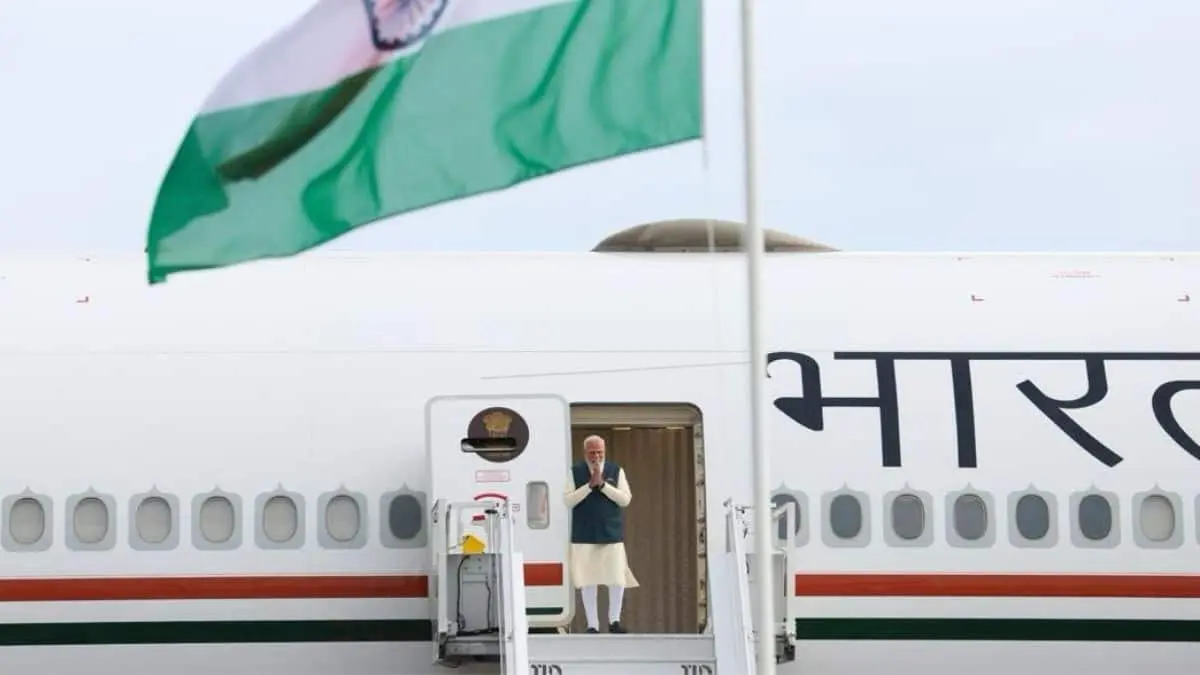
Prime Minister Narendra Modi has embarked on a five-nation tour of Europe, with stops in the Netherlands, Sweden, Norway, and Italy (with a planned visit to France later). This high-level diplomatic mission comes at a time when India is looking to diversify its strategic partnerships and reduce dependence on traditional allies. The visit is expected to yield concrete outcomes in sectors ranging from clean energy and digital infrastructure to defense and maritime security.
Netherlands: A Gateway to Europe's Green Revolution
India’s relationship with the Netherlands has traditionally been strong, with the Dutch being one of the largest investors in India. However, the current visit focuses on collaborating in the field of renewable energy and water management. The Netherlands is a global leader in sustainable agriculture, circular economy, and offshore wind energy. India aims to leverage Dutch expertise to meet its ambitious target of 500 GW of non-fossil fuel capacity by 2030.
Modi is expected to sign several memoranda of understanding (MoUs) on water conservation and smart city development. The Dutch port of Rotterdam, Europe’s largest, is also a key partner for India’s logistics sector. Discussions are ongoing to create a dedicated India-Netherlands corridor for green hydrogen trade. This would not only help India export green hydrogen to Europe but also attract Dutch investment in electrolyzer manufacturing plants in India.
Sweden: Innovation and Digital Cooperation
Sweden and India have a deep-rooted partnership in innovation, especially in the fields of information technology, automotive safety, and life sciences. The joint India-Sweden Innovation Partnership was launched in 2018, and this visit is expected to accelerate the second phase. Modi will meet with CEOs of Swedish multinationals such as Volvo, Ericsson, and AstraZeneca to discuss expanding manufacturing bases in India.
A major highlight is the proposed cooperation on 6G research and development. Both countries have robust telecom ecosystems, and Sweden’s Ericsson is already a key player in India’s 5G rollout. The new agreement aims to jointly develop open RAN technologies and cybersecurity standards. Additionally, Sweden’s expertise in sustainable transportation—particularly electric vehicles and battery recycling—aligns with India’s FAME II scheme and the goal of 30% EV penetration by 2030.
Norway: Blue Economy and Arctic Engagement
Norway is a critical partner for India’s blue economy ambitions. The visit builds on the 2019 MoU on marine spatial planning and the India-Norway Task Force on Ocean Cooperation. Modi is expected to inaugurate a joint research center for sustainable fisheries and marine biotechnology. Norway’s state-owned oil company Equinor has shown interest in exploring hydrocarbon reserves in the Bay of Bengal, but the focus has shifted toward offshore wind and carbon capture technologies.
Another key dimension is the Arctic. India has observer status in the Arctic Council, and Norway is one of the eight Arctic states. The visit will likely result in a bilateral agreement for scientific cooperation in Svalbard, where India already operates the Himadri research station. Climate change and polar research are priority areas, and joint projects on glacier monitoring and sea-ice mapping are on the table.
Italy: Strengthening the Mediterranean Link
Italy’s role as a gateway to Southern Europe and the Mediterranean makes it a vital partner for India. Modi’s itinerary includes meetings with Italian Prime Minister Giorgia Meloni and business leaders from industries like fashion, luxury goods, and machinery. Defense cooperation is a major agenda item, as Italy is a key European producer of naval vessels and helicopters.
India and Italy recently participated in joint naval exercises in the Mediterranean, and Modi is likely to push for a logistics agreement to allow Indian warships to use Italian ports. On the economic front, Italy’s small and medium enterprises (SMEs) are eager to invest in India’s manufacturing sector, particularly in automotive components and leather goods. The two sides are also expected to announce a new cultural exchange program to boost people-to-people ties.
Broader Strategic Context
This European tour is part of a larger Indian foreign policy shift toward deeper engagement with Europe, often referred to as the 'Look West' policy. With India adopting an 'Act East' stance vis-à-vis Southeast Asia, the European dimension has been relatively underplayed until recent years. The rise of China and the geostrategic competition in the Indo-Pacific have prompted India to seek alternative partnerships. Europe, despite its internal challenges, remains a reliable partner in technology, governance, and trade.
Modi is also using this tour to pitch India as a manufacturing hub under the 'Make in India' initiative. Many European companies are looking to de-risk their supply chains away from China, and India offers a viable alternative. The visit is expected to generate significant foreign direct investment announcements, especially in electronics, defense, and chemicals. Additionally, trade negotiations for a free trade agreement between India and the European Union are back on the table after a long pause, and these bilateral meetings serve to build momentum for that larger deal.
Another underlying theme is cooperation in the Indo-Pacific. While India has strong ties with the United States and Japan, European nations like the Netherlands, Sweden, Norway, and Italy have their own interests in the region, from maritime security to freedom of navigation. Modi is likely to push for a joint statement supporting the rules-based international order. The four countries have also shown willingness to collaborate with India on counterterrorism and intelligence sharing, particularly in the context of the Taliban’s return in Afghanistan.
The visit also has a significant people-to-people component. The Indian diaspora in these countries is sizable and well-integrated. Modi will hold community events in The Hague, Stockholm, Oslo, and Rome to strengthen cultural ties and leverage the diaspora as a bridge for economic cooperation. Remittances from Europe contribute substantially to India’s foreign exchange reserves, and efforts are being made to streamline visa processes for students and skilled professionals.
Challenges and Criticisms
Despite the optimistic outlook, the visit is not without challenges. India’s stance on the Ukraine conflict—maintaining a neutral position and continuing energy imports from Russia—has strained ties with some European nations, particularly the Nordic countries. Norway and Sweden have been vocal in their support for Ukraine, and Modi is expected to address these concerns diplomatically. The issue of human rights and democratic values may also come up in closed-door meetings, though India often counters with its own developmental narrative.
On the economic front, the lack of a finalized EU-India trade deal hampers bilateral trade potential. While these four nations are individually strong economies, the absence of a unified tariff regime means that Indian exporters still face hurdles. Modi’s announcements regarding investment and technology transfer will need to be followed up with concrete implementation to avoid the fate of past MoUs that remained on paper.
Domestically, the visit comes at a time when the opposition is criticizing the government for rising fuel prices and unemployment. The success of the tour will partly be measured by how quickly the promised investments translate into jobs. The government has highlighted that the 'Modi doctrine' of personal diplomacy has often unlocked doors in Europe, but tangible outcomes will be scrutinized closely.
As Modi wraps up his engagements in Rome, the final leg of his tour, the Ministry of External Affairs will compile a joint statement capturing the main takeaways. Early reports suggest that at least 30 bilateral agreements will be signed across the four countries, covering sectors such as space exploration, artificial intelligence, and smart farming. The long-term impact of this visit will depend on how well these agreements are institutionalized and whether India can maintain its strategic autonomy while deepening ties with Europe.
Source:Firstpost News