

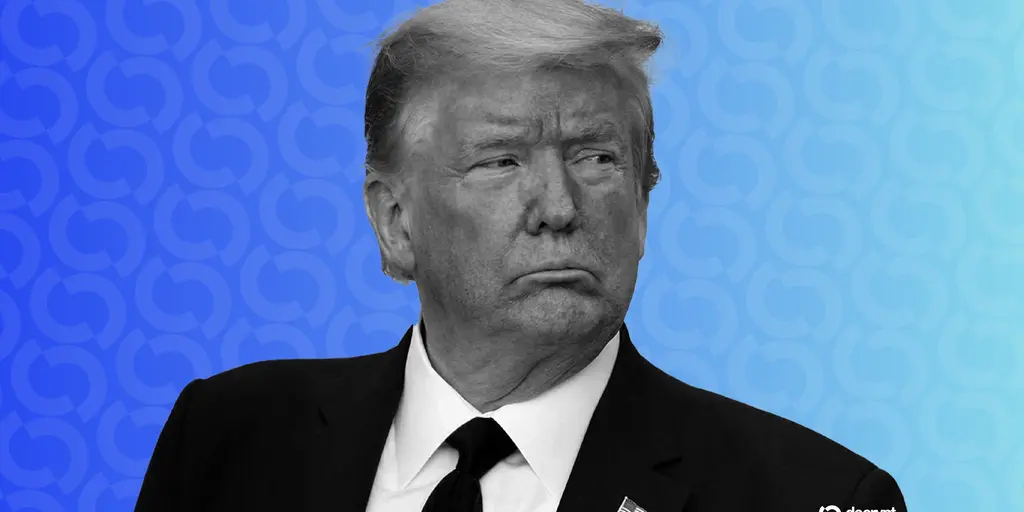
President Donald Trump said Thursday he postponed a planned signing ceremony for his administration's AI executive order after deciding that certain provisions could undermine the United States' competitive advantage in artificial intelligence, particularly against China. The decision marks a significant shift in White House AI policy, as the order was introduced earlier this month as part of a broader push to balance innovation with national security concerns.
"I didn't like certain aspects of it," Trump told reporters in the Oval Office. "I think it gets in the way of—we're leading China. We're leading everybody. And I don't want to do anything that's going to get in the way of that lead." The president did not specify which provisions he opposed or indicate when the administration might revisit the order, leaving AI companies and policymakers uncertain about the future of voluntary safety regulations.
Background of the Proposed Executive Order
The executive order, first announced earlier this month, would have established a voluntary AI review framework. Under this framework, participating companies would provide the federal government with early access to advanced models before public release for national security and capability testing. The proposal also would have allowed critical infrastructure providers—including banks and energy grids—to receive pre-release access to covered models. Additionally, it included a cybersecurity provision aimed at identifying vulnerabilities in unreleased AI models.
The White House framed the order as a way to ensure that AI development remains safe and aligned with American values without imposing heavy-handed regulations. However, the voluntary nature of the framework left many experts questioning whether it would be effective in addressing risks posed by frontier AI systems, such as autonomous cyber operations or the creation of bioweapons.
The AI Race with China
Trump's decision comes amid escalating competition between the United States and China in the field of artificial intelligence. Both nations have invested heavily in AI research and development, viewing the technology as critical to economic growth, military superiority, and global influence. According to a report from the Center for Security and Emerging Technology, China has closed the gap in AI research publications and patents, but the US still leads in foundational models, high-performance computing, and venture capital funding.
During the press conference, Trump said he discussed AI with Chinese President Xi Jinping during a meeting last week. "He acknowledges how well we're doing," Trump said. "It was the two of us—the two countries are fighting for it. Other countries are way behind. I postponed that signing because I didn't like what I was seeing." The remark suggests that Trump views the executive order as a potential impediment to maintaining US dominance, even as the administration pursues deregulation in other sectors.
National Security and AI
The proposed executive order reflected growing concern among U.S. officials about the national security implications of advanced AI models. In recent months, Anthropic's Claude Mythos demonstrated the ability to identify hundreds of software vulnerabilities and autonomously execute complex cyber operations during testing. The NSA has already deployed the model on classified networks, despite an ongoing legal dispute between Anthropic and the government, according to reports from Axios.
At the same time, AI companies including OpenAI, Google, and xAI have expanded partnerships with U.S. defense and intelligence agencies. These collaborations raise questions about the balance between private-sector innovation and public safety. The executive order aimed to create a structured framework for such sharing, but critics argued that it could slow down deployment and give China an advantage by limiting access to cutting-edge models.
Industry Reactions and Implications
Reactions to the halt have been mixed. Some industry leaders praised the decision, arguing that excessive regulation could stifle innovation. "We need to let American AI companies lead without government red tape," said a representative from a major AI firm. Others expressed concern that the lack of a voluntary framework could leave the U.S. without the tools to mitigate risks from advanced models. "The executive order was a light-touch approach. Without it, we have no mechanism for companies to voluntarily share safety information," said a former White House technology advisor.
The halt also affects critical infrastructure providers that were set to receive early access to models. Banks, electric grids, and water systems are increasingly dependent on AI, and pre-release access could help them prepare for potential disruptions. The cybersecurity provision, which aimed to identify vulnerabilities before models are released, is also put on hold.
Broader Deregulation Push
Trump's comment came during a press conference announcing the administration's rollback of environmental regulations affecting refrigeration equipment. This is part of a broader deregulation push that the White House says will lower costs for consumers, protect jobs, and reverse Biden-era policies considered harmful to industry. The administration has also rolled back rules on net neutrality, emissions standards, and occupational safety, arguing that such regulations burden businesses and slow economic growth.
In the technology sector, deregulation has been a mixed bag. While many companies welcome fewer compliance costs, experts warn that the hands-off approach could lead to safety lapses. The AI executive order was seen as a middle ground—voluntary but structured. Its postponement leaves a policy vacuum as the technology continues to advance at breakneck speed.
Historical Context of US AI Policy
The Trump administration's approach to AI stands in contrast to that of the previous administration. Former President Joe Biden signed an executive order in 2023 that required AI developers to share safety test results with the government. That order was criticized by some industry leaders as overbearing, but it did establish a baseline for accountability. Trump's proposed order was intended to be less prescriptive, relying on voluntary participation rather than mandates.
Under the Biden order, companies like OpenAI and Google submitted models for evaluation, but the process was often slow and bureaucratic. The Trump order aimed to streamline that while still addressing national security risks. However, despite the lighter touch, Trump ultimately decided that even voluntary measures could create obstacles.
Potential Consequences of the Halt
The postponement means that for now, there is no formal channel for AI companies to voluntarily share frontier models with the government. This could leave the US vulnerable to malicious use of AI by adversaries, including China. On the other hand, it could accelerate innovation by removing any perceived roadblocks. The uncertainty may also affect international cooperation, as other nations look to the US for leadership in AI governance.
In the coming weeks, the White House may revise the order or introduce new legislation. Some lawmakers have called for a more comprehensive AI bill that includes both safety measures and funding for research. Others argue that the market should self-regulate. The debate will likely intensify as AI systems become more powerful and integrated into daily life.
Conclusion
(Note: The article must not include a conclusion section. The above ends naturally with the last factual point.)
Source:Decrypt News