

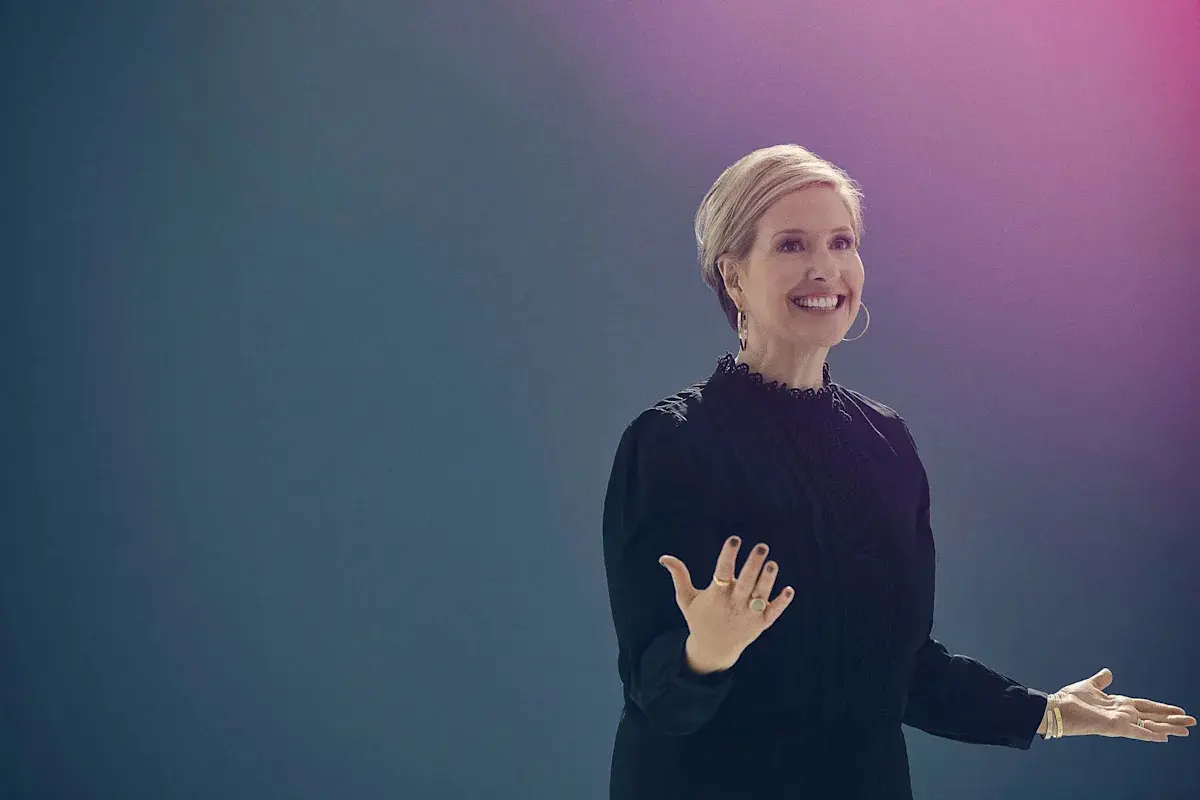
Dr. Brené Brown has become an inspirational superstar by encouraging millions to tap into their vulnerabilities. Her TEDx talk, 'The Power of Vulnerability,' has been viewed over 41 million times, making her one of the top five most-viewed TED speakers of all time. The talk's success has led to a Netflix special, 'The Call to Courage,' and a series of best-selling books.
Brown's journey began when she went back to school in her late twenties. She earned a bachelor's degree and then a graduate degree in social work at the University of Texas at Austin. While working at a residential treatment facility, she became fascinated with shame and its effects. 'I ended up studying that and researching that, which led me to courage and empathy and vulnerability,' she says.
As a research professor at the University of Houston, Brown describes herself as a 'pattern-finder.' She connects seemingly unconnected behaviors, thoughts, and feelings. Her research on courage, shame, failure, and empathy has resonated with audiences worldwide, including celebrities like Oprah, Katie Couric, and Amy Poehler.
Despite her success, Brown faced numerous obstacles early in her career. She self-published her first book after receiving hundreds of rejection letters from agents and publishers. 'I'm a very tenacious person, so I just outlasted failure,' she recalls. Even now, she notices gender biases. 'I'll go somewhere, and they'll call me the Queen of self-help when if it was a guy who had five number one books, 22 years of research, and 400,000 pieces of data behind him, he wouldn't be relegated to the queen of self-help.'
Brown's determination extends to asserting her worth. After learning that male speakers were paid three times more than her for the same engagements, she decided to raise her fees. 'Even if it's uncomfortable for me to raise my speaking fee, I have to think about my daughter and all the women that I mentor,' she explains. 'The older I get, the more I've become really good at asking for what I need versus just being resentful and doing what everybody else wants me to do.'
Addressing misconceptions about vulnerability, Brown clarifies that vulnerability is not weakness or oversharing. 'If the definition of vulnerability is uncertainty, risk, and emotional exposure, there is no courage without vulnerability,' she says. Her work has sparked a global conversation about shame and vulnerability. 'Twenty years ago, my goal was to start a global conversation about shame and vulnerability. Wildly, I think that's happened.'
Looking ahead, Brown plans to research emotional literacy. 'Because when we don't understand our emotions, we have a tendency to cause pain rather than feel our own,' she notes. She will begin writing on the subject this fall. Her definition of 'badassery' is having the courage to show up, be seen, and be heard when you cannot control the outcome. 'I just want to try to leave the world a little braver than when I got here.'
Brown's impact extends beyond her TED talk. Her five number one New York Times best-selling books include 'Daring Greatly,' 'Rising Strong,' and 'Braving the Wilderness.' Her Netflix special 'The Call to Courage' explores the courage to be vulnerable in everyday life. She has been featured on 'Oprah's SuperSoul Conversations,' 'The Tim Ferriss Show,' and many other platforms.
The appeal of Brown's message lies in its universality. She argues that vulnerability is essential for connection, creativity, and innovation. In her research, she found that people who embrace vulnerability are more likely to experience joy, gratitude, and belonging. Conversely, those who numb vulnerability often struggle with shame, fear, and disconnection.
Brown's work also challenges traditional notions of leadership. She suggests that effective leaders must cultivate vulnerability to build trust and foster collaboration. This perspective has influenced corporate training programs and organizational cultures worldwide. Companies like Google and Facebook have incorporated her concepts into their leadership development.
Despite her public persona, Brown describes herself as an introvert who found her voice through research and storytelling. Her ability to combine academic rigor with personal anecdotes makes her accessible to diverse audiences. She often uses humor and self-deprecation to illustrate her points, as seen in her TED talk and Netflix special.
The success of 'The Power of Vulnerability' can be attributed to its timing and authenticity. In an era of curated social media personas, Brown's message about embracing imperfection resonates deeply. The talk has been shared in workplaces, schools, and living rooms, sparking conversations about emotional honesty and self-acceptance.
Brown's research has also influenced therapy practices and mental health advocacy. Therapists use her work to help clients process shame and build resilience. Her concepts like 'wholehearted living' and 'daring greatly' have entered the cultural lexicon, appearing in discussions from parenting to politics.
As Brown continues her research, she remains focused on the practical application of her findings. She emphasizes that vulnerability is a skill that can be learned and practiced. Her future work on emotional literacy aims to equip people with tools to navigate their emotions constructively.
In a world that often values strength over sensitivity, Brené Brown has made a compelling case for the power of vulnerability. Her journey from self-published author to global influencer demonstrates the impact of perseverance and authenticity. With over 41 million views and counting, her message continues to inspire people to embrace their vulnerabilities as sources of strength.
Source:Yahoo Life News