

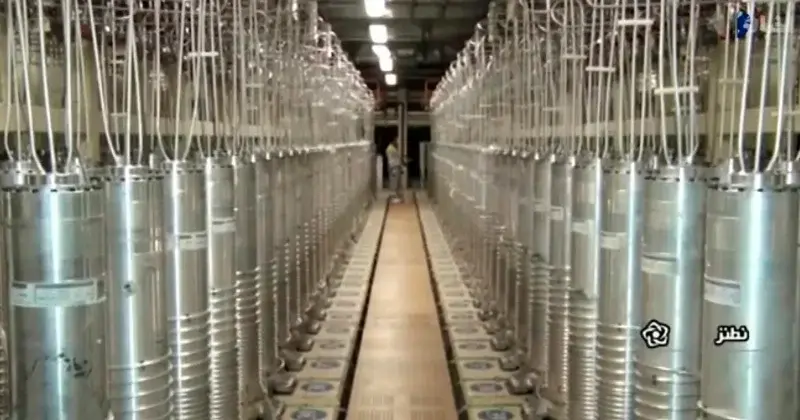
In a significant development that contradicts earlier speculation, Iran has refused to hand over its highly enriched uranium stockpile as part of any deal with the United States. A senior Iranian source disclosed this to Reuters on May 24, directly contradicting previous reports that suggested Tehran was open to such a transfer. The source emphasized that nuclear-related discussions were not part of any preliminary agreements reached between the two sides.
Key Facts from the Report
- Iran held approximately 440.9 kg of 60%-enriched uranium before strikes in June 2025. Post-strike analyses suggest that much of that stockpile may have been moved to Isfahan ahead of time, meaning Iran likely retained a significant portion of its nuclear material.
- Iran has signaled a willingness to downblend its uranium domestically, reducing enrichment levels to 3.7% or 20% under International Atomic Energy Agency (IAEA) supervision. Downblending reduces the material’s proximity to weapons-grade levels without actually giving it up.
- The US side has reportedly been pushing proposals that would tie sanctions relief to strict limits on Iran’s enrichment capabilities and stockpile management. Iranian officials have repeatedly asserted that enriched uranium will not be transferred under any circumstances, even as broader talks about frozen funds and sanctions relief continue.
- Iran sits on some of the world’s largest petroleum reserves, and any escalation tends to push crude prices higher as traders price in supply disruption risk. Bitcoin has shown increasing correlation with macro risk sentiment over the past several years.
Historical Context: The JCPOA and Its Collapse
The 2015 Joint Comprehensive Plan of Action (JCPOA) represented the closest the international community has come to a comprehensive agreement with Iran regarding its nuclear program. Under the deal, Iran agreed to limit its uranium enrichment to 3.67%, far below the 90% threshold for weapons-grade material. In exchange, the United States, the European Union, and the United Nations lifted nuclear-related sanctions. The agreement was hailed as a landmark of diplomacy and non-proliferation.
However, the US withdrawal from the JCPOA in 2018 under President Donald Trump set the stage for the current impasse. The reimposition of sanctions crippled Iran’s economy, leading Tehran to gradually escalate its enrichment activities in response. Iran began enriching uranium to 20% in 2021 and later to 60%, a level that is just a short technical step from weapons-grade 90%. By mid-2025, Iran had accumulated hundreds of kilograms of 60%-enriched material, enough for several nuclear weapons if further enriched.
The June 2025 Strikes and Their Aftermath
The military dimension of the crisis intensified in June 2025 when Israel launched airstrikes on Iranian nuclear facilities. These strikes, reportedly coordinated with the United States, targeted key sites including enrichment plants and research centers. However, post-strike analyses suggest that Iran had anticipated such an attack and moved much of its enriched uranium stockpile to underground facilities in Isfahan. This strategic preparation meant that Iran likely retained a significant portion of its nuclear material, limiting the effectiveness of the military action.
The strikes fundamentally altered the negotiating dynamic. Iran now views any deal that requires exporting its enriched uranium as a national security risk, given that it has already proven vulnerable to attack. The psychological impact of the strikes has made Tehran far more cautious about relinquishing control over its nuclear assets.
Current Negotiation Dynamics
The negotiations currently underway in Vienna or other venues aim to find a middle ground. The US has pushed for a framework that would tie sanctions relief to strict limits on Iran’s enrichment capabilities and stockpile management. Key proposals include capping enrichment at 3.67% for a fixed period, allowing IAEA inspections, and requiring Iran to export its 60% stockpile. However, the senior Iranian source’s statement confirms that Tehran is unwilling to export any enriched uranium, viewing it as a bargaining chip and a deterrent against future attacks.
Instead, Iran has proposed domestic downblending under IAEA supervision. This approach would reduce the enrichment level of its stockpile to 3.7% or 20%, making it less immediately dangerous but still under Iranian control. The IAEA would monitor the process to ensure compliance. The US has shown some openness to this idea, as it would verifiably reduce the weapons-grade potential of the material without requiring a transfer that Iran sees as unacceptable.
Impact on Global Markets
The standoff has significant implications for global financial markets. Iran holds some of the world’s largest proven oil reserves, and any geopolitical instability in the region threatens to disrupt crude supply. Oil prices tend to spike when traders perceive a risk of supply disruption, especially if the Strait of Hormuz could be affected. Higher oil prices feed into broader inflation fears and can trigger a risk-off sentiment across asset classes.
Bitcoin and other cryptocurrencies have shown increasing correlation with macro risk sentiment over the past several years. When oil spikes on geopolitical fear, it often triggers a broader risk-off move that drags equities and crypto lower in the short term. However, some traders view bitcoin as a hedge against fiat currency debasement and geopolitical uncertainty, which can provide a floor during crises. The mixed signals make crypto markets particularly sensitive to headlines from the Iran negotiations.
For investors, the key takeaway is that any resolution that involves domestic downblending could be seen as moderately positive, as it might unlock sanctions relief and reduce the risk of escalation. Conversely, a complete breakdown of talks could lead to further military strikes, higher oil prices, and renewed volatility in risk assets.
Broader Geopolitical Implications
The Iran nuclear issue is not isolated. It affects relations between the US and its European allies, who have sought to preserve the JCPOA framework. Russia and China have also been involved, with Moscow acting as a mediator in some rounds. The outcome of the current talks will shape the security architecture of the Middle East for years to come. A deal that allows Iran to keep its enriched material under IAEA supervision could set a precedent for other nations seeking nuclear capabilities. Conversely, a failure to reach any agreement could embolden Iran’s regional rivals, such as Saudi Arabia, to pursue their own enrichment programs.
The IAEA remains the primary oversight body, and its ability to monitor and verify any domestic downblending will be crucial. Iran has allowed IAEA inspectors access to some sites, but tensions over past undeclared materials have eroded trust. The IAEA’s Board of Governors has passed resolutions criticizing Iran, but Tehran has continued to expand its enrichment capacity. The current situation underscores the difficulty of balancing non-proliferation goals with national sovereignty concerns.
Looking ahead, the possibility of domestic downblending offers a potential compromise that could unlock sanctions relief without requiring uranium export. This framework would allow Iran to maintain control over its nuclear material while reducing the immediate enrichment levels to a less threatening threshold. The IAEA’s oversight would provide confidence to the international community that the material is not being diverted for weapons purposes. If such a deal is reached, it could stabilize energy markets and reduce geopolitical risk premiums. However, as the senior Iranian source made clear, the path remains fraught with obstacles, and the refusal to hand over the stockpile adds fresh uncertainty to an already volatile landscape.
Source:Crypto Briefing News