

The Disappointing Opening Weekend
The much-anticipated theatrical release of The Mandalorian and Grogu, starring Pedro Pascal, has fallen far short of expectations. Opening over the Memorial Day weekend, the film grossed just $81.9 million domestically from Friday to Sunday. While the four-day holiday weekend total is projected to reach $102 million, these numbers place the film among the lowest-grossing openings in the entire Star Wars franchise. For a series that once shattered box office records with The Force Awakens ($248 million in 2015), this result is a stunning reversal of fortune and has sparked intense debate about the health of the galaxy far, far away.
Box Office Numbers in Context
To understand the magnitude of this failure, it is essential to compare The Mandalorian and Grogu’s debut with previous Star Wars theatrical releases. The most notorious flop in the franchise has long been 2018’s Solo: A Star Wars Story, which earned $84.4 million in its three-day opening weekend (Memorial Day) and eventually grossed a disappointing $393 million worldwide. When adjusted for inflation, Solo’s opening weekend in 2025 dollars is approximately $112 million — meaning The Mandalorian and Grogu made roughly $30 million less in real terms. Over the four-day holiday, Solo made $103 million; adjusted for inflation, that equals $139 million, while The Mandalorian and Grogu is expected to hit only $102 million — a deficit of $37 million. On the international front, the film brought in $63 million, for a worldwide first weekend of $145 million. By comparison, Solo’s international opening was $65 million, and its global total was $149.4 million. Adjusted for inflation, Solo’s global opening weekend exceeds $198 million, meaning The Mandalorian and Grogu trails by over $53 million. These numbers indicate that the new film has not only failed to match the franchise’s glorious past but has also performed worse than what was previously considered its biggest box office disaster.
The opening weekend figures are even more sobering when lined up against the other Star Wars films. Star Wars: The Rise of Skywalker (2019) debuted to $177 million, The Last Jedi (2017) to $220 million, Rogue One (2016) to $155 million, and The Force Awakens (2015) to $248 million. Even Star Wars: Episode I – The Phantom Menace (1999) opened to $105 million (unadjusted), which in 2025 dollars would be over $200 million. The only Star Wars film that opened lower than The Mandalorian and Grogu in its three-day weekend is the 2008 animated feature Star Wars: The Clone Wars, which earned just $14.6 million. For a live-action film starring a character who has been the centerpiece of a massively popular Disney+ series, this is an unmitigated disaster.
Why Did It Fail?
Several factors contributed to the film’s poor box office performance. First, the popularity of The Mandalorian television series had been waning. The show’s first season in 2019 was a cultural phenomenon, thanks in large part to the adorable "Baby Yoda" (Grogu) and the enigmatic Mandalorian. However, the second and third seasons saw declining viewership and mixed critical reception. Many fans felt the story had lost its focus, and the decision to turn the series into a launchpad for other spin-offs diluted its appeal. By the time the feature film was announced, the franchise fatigue that had already set in was palpable. The 30-second Super Bowl ad for the film did little to generate excitement. Instead of a gripping trailer that showcased the film’s story and stakes, viewers got a commercial that many described as looking more like a Ford truck advertisement than a Star Wars spectacle. The ad featured the Mandalorian and Grogu being pulled along by Tauntauns — a reference to the original trilogy — but it failed to convey the epic adventure that fans were hoping for. Social media reactions were overwhelmingly negative, with comments like "This feels like a new Ford truck commercial more than a Star Wars trailer" and "You have the opportunity to market the first Star Wars film in six and a half years at the Super Bowl, and all you give us is a Ford ad?!"
Marketing overall was weak. The Blast had previously noted that while die-hard Star Wars fans were aware of the film, a significant portion of the general public had no idea it was releasing. In an era where streaming has reduced the urgency to rush to theaters, and with Disney+ already offering the entire The Mandalorian series, many potential viewers may have decided to wait for the film to appear on the streaming service rather than paying for a ticket. This cannibalization of theatrical audiences by the studio’s own streaming platform is a growing problem for Disney, and The Mandalorian and Grogu may be its most prominent victim so far.
Pedro Pascal’s Role and Career
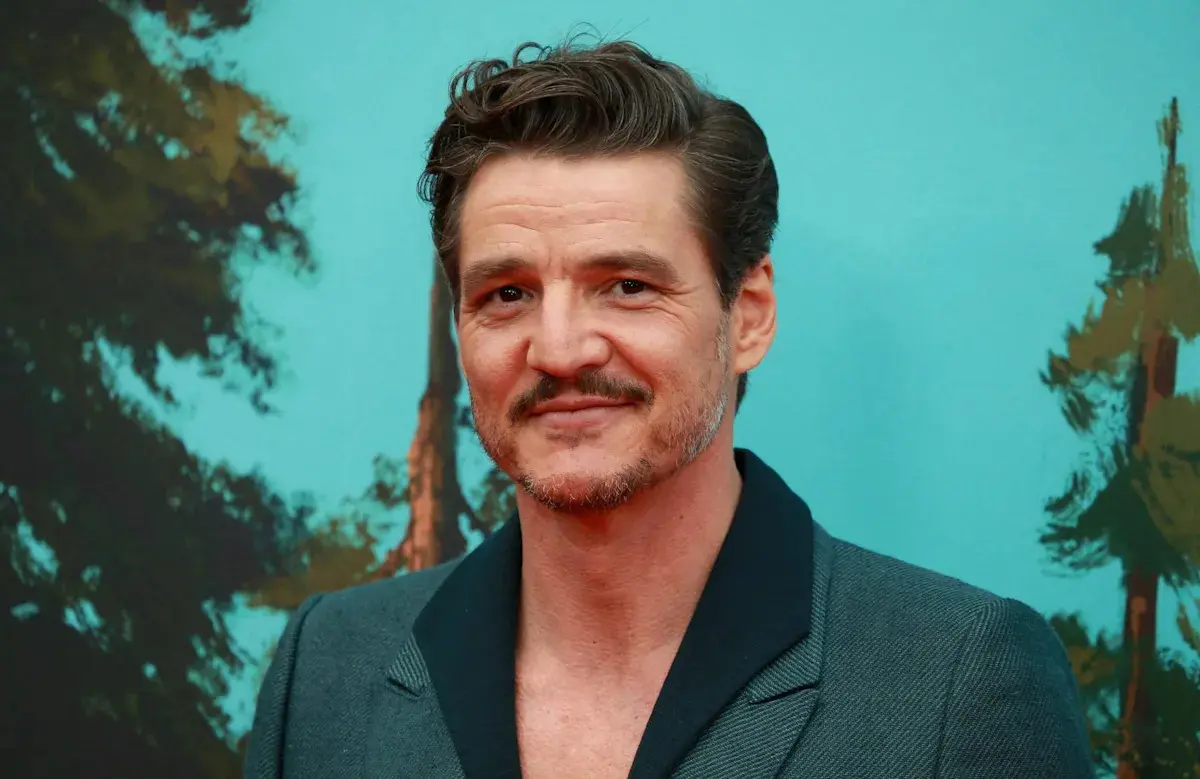
Pedro Pascal has become one of the most recognizable actors in Hollywood, thanks to roles in Game of Thrones, Narcos, The Last of Us, and of course, The Mandalorian. His portrayal of the masked bounty hunter Din Djarin has been praised for conveying emotion and depth despite rarely showing his face. Pascal’s star power was expected to be a major draw for the film, but even his presence could not overcome the broader issues. Pascal has been vocal about his support for LGBTQ+ rights and social justice causes, which has made him a polarizing figure in some circles. He added gender pronouns to his X (formerly Twitter) bio, a move that was mocked by his former co-star Gina Carano. Carano, who played Cara Dune in the first two seasons of The Mandalorian, was fired by Lucasfilm in 2021 after making controversial social media posts, including one that compared the treatment of American conservatives to the Holocaust. Carano later changed her bio to "beep/bop/boop" in what was widely interpreted as a dig at Pascal’s pronoun declaration. In a recent interview, Carano stated that she and Pascal no longer keep in touch, and that the last time they spoke was after the death of their co-star Carl Weathers in February 2024. While Carano said she hoped the film would do well, the controversy surrounding her dismissal and the ongoing culture war debates have likely alienated some audiences.
Political Controversies and the White House Post
Another unexpected controversy involved former President Donald Trump. The White House’s official X account posted an image on May 4 (Star Wars Day) depicting Trump as the Mandalorian, with his face visible instead of the helmet, and holding an American flag. The post was captioned with "In a galaxy that demands strength — America stands ready. This is the way. May 4 be with you." The image also included Grogu in the Mandalorian’s sling bag. The post drew sharp criticism from many Star Wars fans, who accused the White House of co-opting a beloved franchise for political purposes. Comments ranged from "Do you really have to defile one of my favorite movie franchises with your delusions?" to more humorous reactions. While some fans saw it as harmless fun, the incident further illustrated how Star Wars has become entangled in political discourse, potentially turning off viewers who are weary of such associations. The film’s box office failure cannot be attributed solely to this one post, but it reflects the broader cultural polarization that can affect a movie’s commercial appeal.
The Future of Star Wars at the Box Office
The failure of The Mandalorian and Grogu raises serious questions about Disney’s stewardship of the Star Wars franchise. Kathleen Kennedy, who has been president of Lucasfilm since 2012, has overseen a rocky decade. While The Force Awakens and Rogue One were major successes, the sequel trilogy’s final two films were criticized for divisive storytelling, and the standalone films Solo and now The Mandalorian and Grogu have failed to ignite. The television side has fared better, with The Mandalorian, Andor, and Star Wars: Visions earning critical acclaim, but the recent cancellation of The Acolyte after one season shows that even streaming is not a guaranteed hit. Disney has announced several upcoming Star Wars films, including a movie directed by James Mangold and another by Sharmeen Obaid-Chinoy, but the poor performance of the most recent release may force the studio to rethink its strategy. Is the franchise simply overexposed? Have fans lost interest in the skywalkers and the rebels? Or does the problem lie in the quality of the movies themselves? The answer is likely a combination of all these factors.
The box office bomb of The Mandalorian and Grogu is not just a bad weekend for Disney — it is a warning signal. The film’s $81.9 million opening, adjusted for inflation, is the worst for any live-action Star Wars film since the franchise’s revival. If the trend continues, Disney may have to pause its theatrical releases and refocus on what made Star Wars great in the first place: compelling characters, fresh stories, and the sense of wonder that captivated audiences for decades. For now, Pedro Pascal’s Mandalorian and Grogu will have to ride off into the sunset — or perhaps into a streaming queue.
Source:Yahoo Entertainment News